Your next best action is… Drumbeat
Drumbeat predicts your next best action on LinkedIn, and then copilots your team to turn their invites, DMs and posts into pipeline.
Drumbeat has totally transformed the way we approach LinkedIn. No more spraying and praying. Now we know what to do next. It’s awesome!
 Jack LesterCofounder, Kinvr




















Coffee first. Then Drumbeat.
Every day, Drumbeat uses math and stats to work out what each member of your team should be doing on LinkedIn. Then, using optimised AI workflows, it helps them get it done, with excellent, consistent results.
-
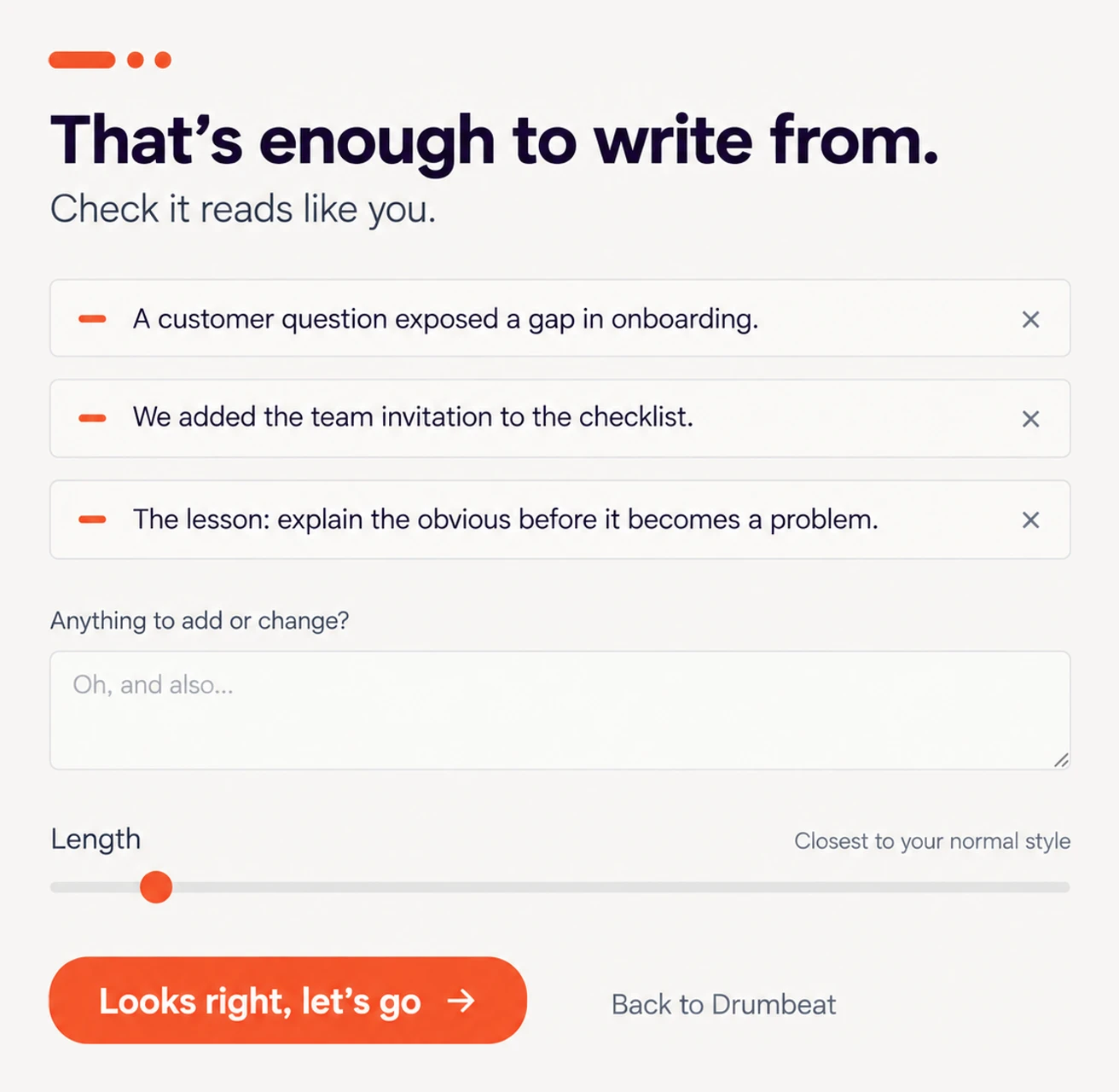
 Yesterday: reach up 21% Across the whole team Brief written Campaigns: the product launch Launch week one Sophie and Jamie fit the brief Expected value Campaign is live Three people taking part
 Jamie posted for it In his own words, with Riff
  Sophie’s post is leading Most comments this week Week one report sent From Analytics, to the board
 Aurélie Marketing
-
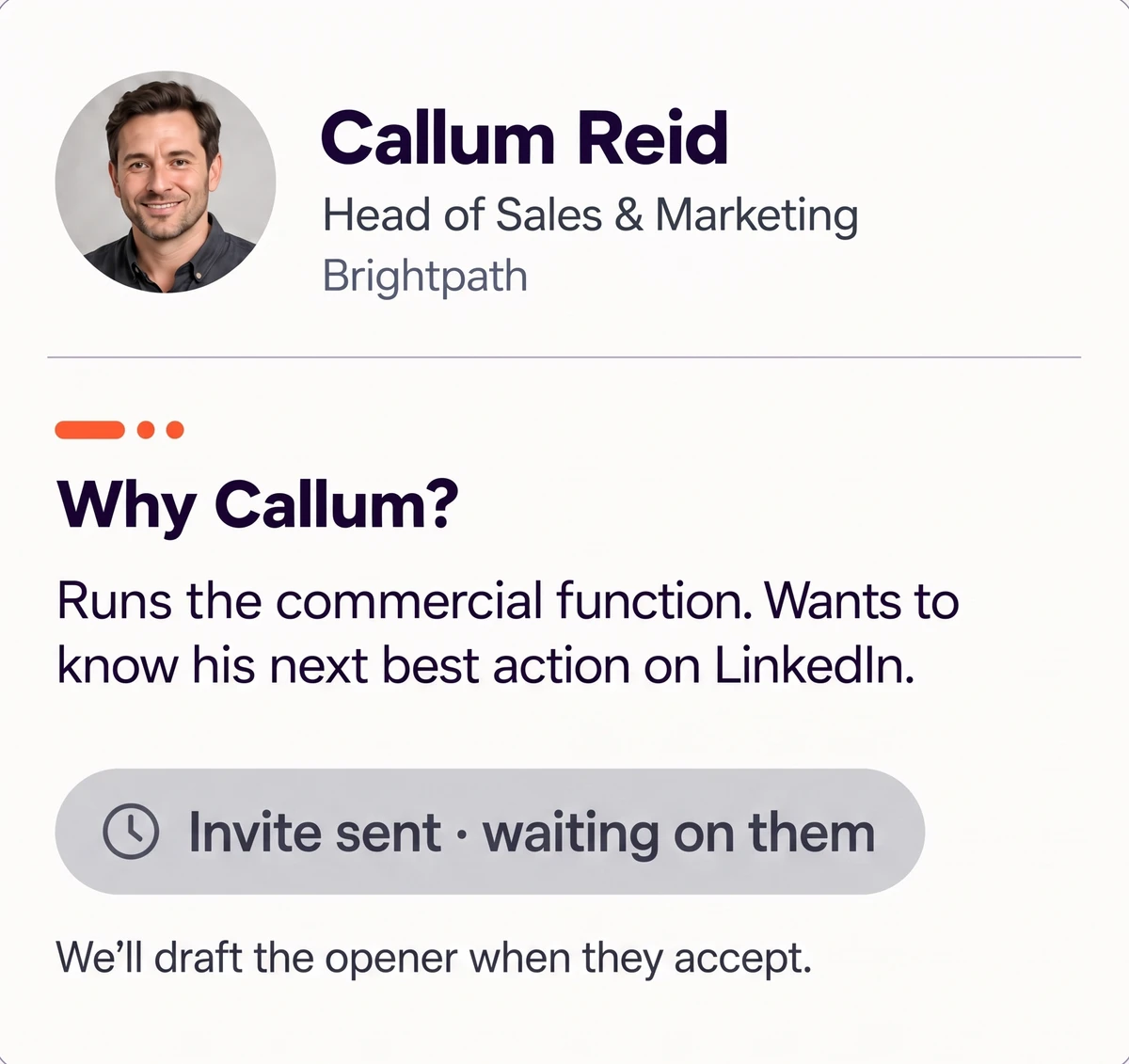
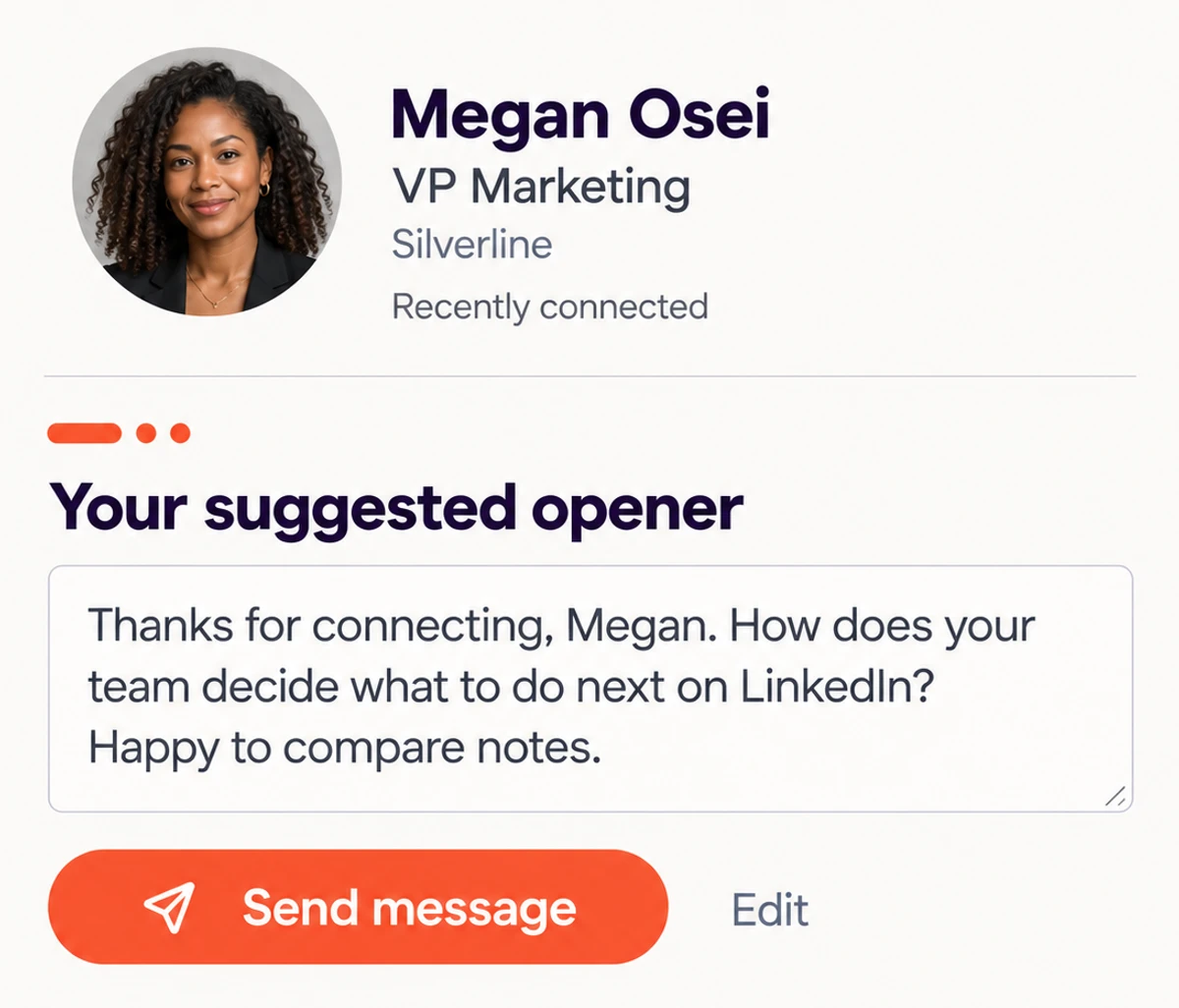
 Three new on Radar People warming to your team Invite Megan Osei Engaged with Sophie’s last post Expected value Invite sent Megan Osei, Silverline
 Megan accepted VP Marketing, Silverline Message ready to send Thanks for connecting, Megan… Expected value Message sent Megan Osei, Silverline Megan replied Asked for a call next week
 Jamie Sales
-
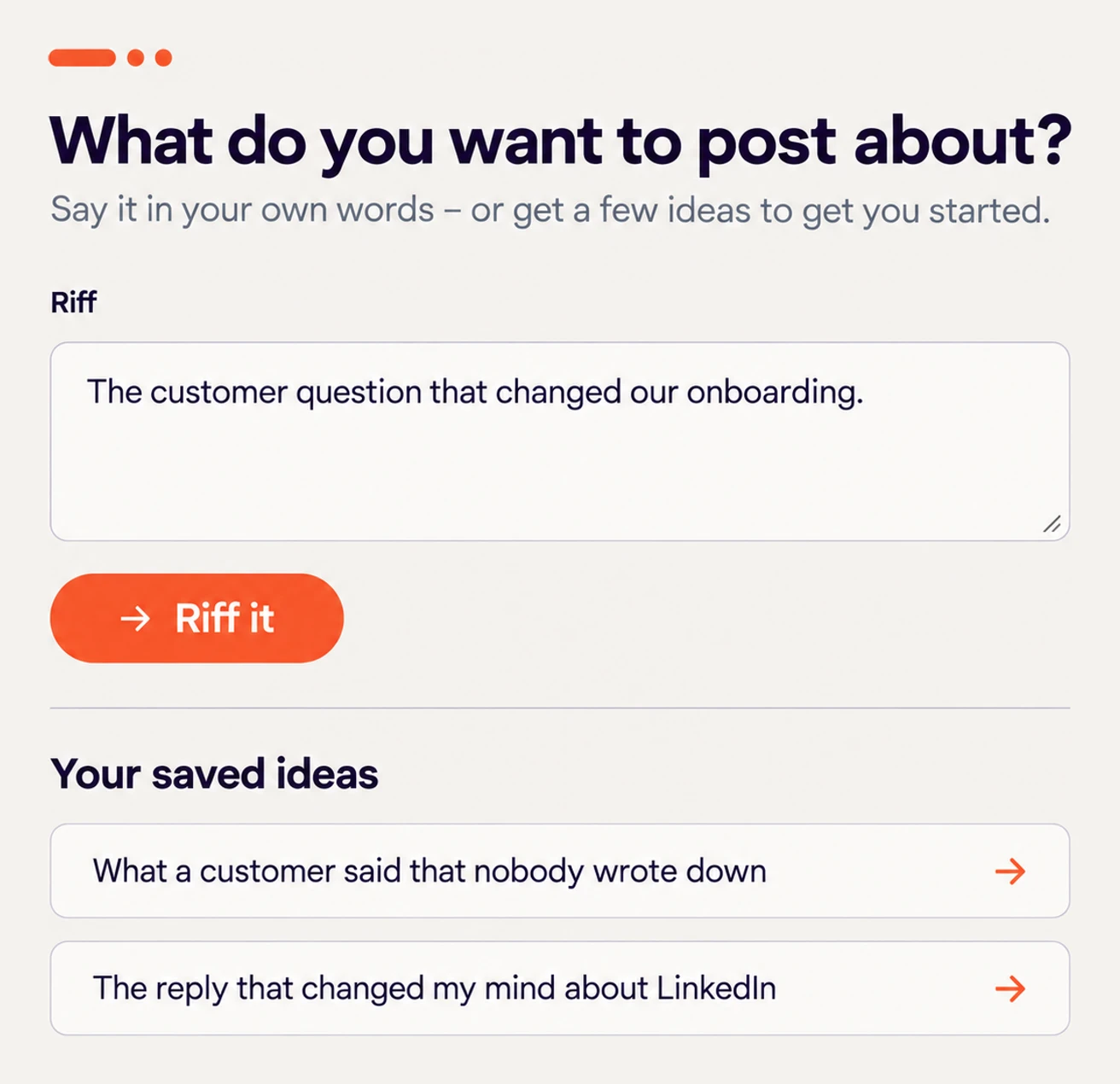
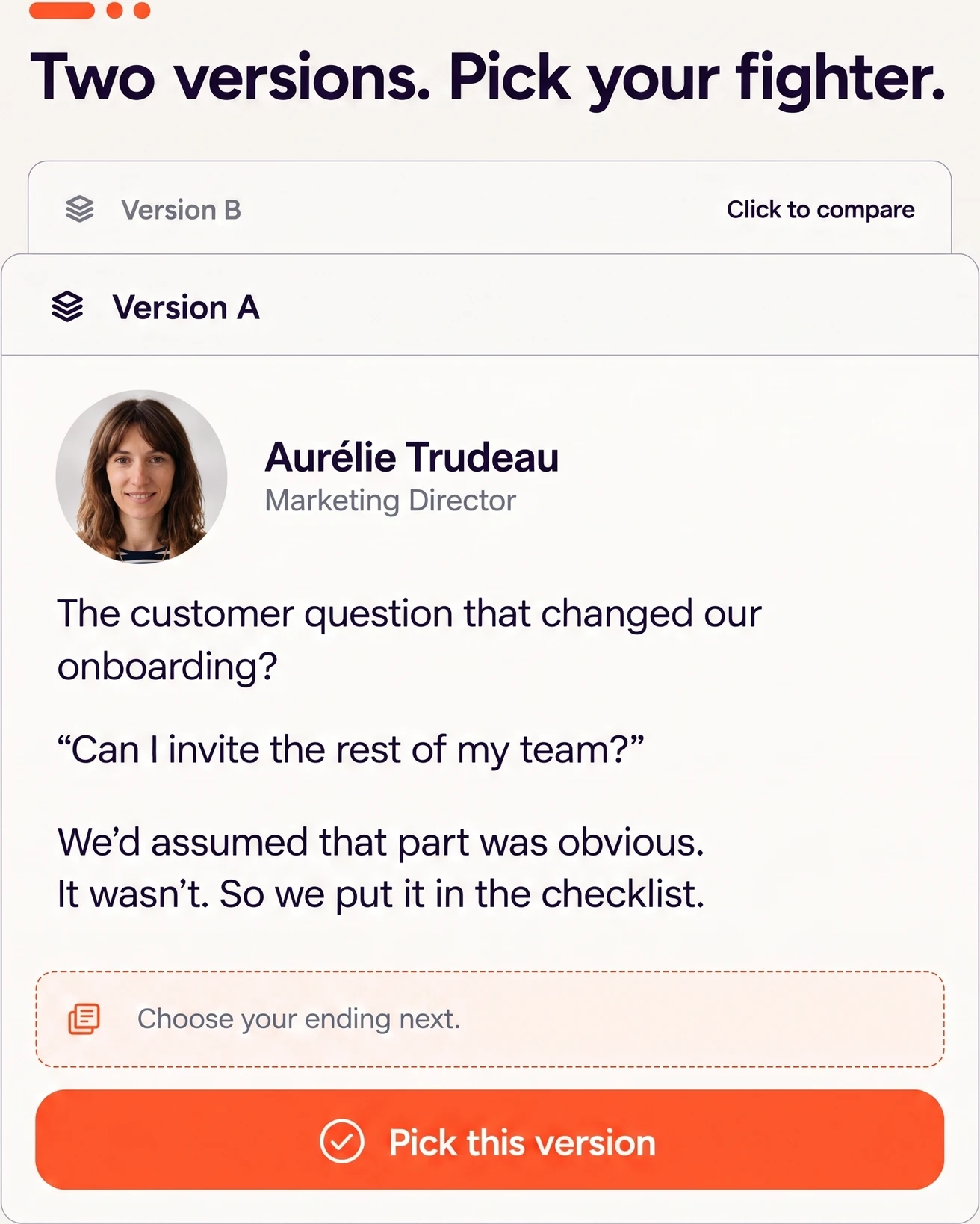
 An idea for you Onboarding questions are up in your market Expected value Ten minutes with Riff Three drafts, in your voice Post approved Out when your audience is up 32 reactions so far Twice your usual by lunch Megan Osei commented VP Marketing, Silverline
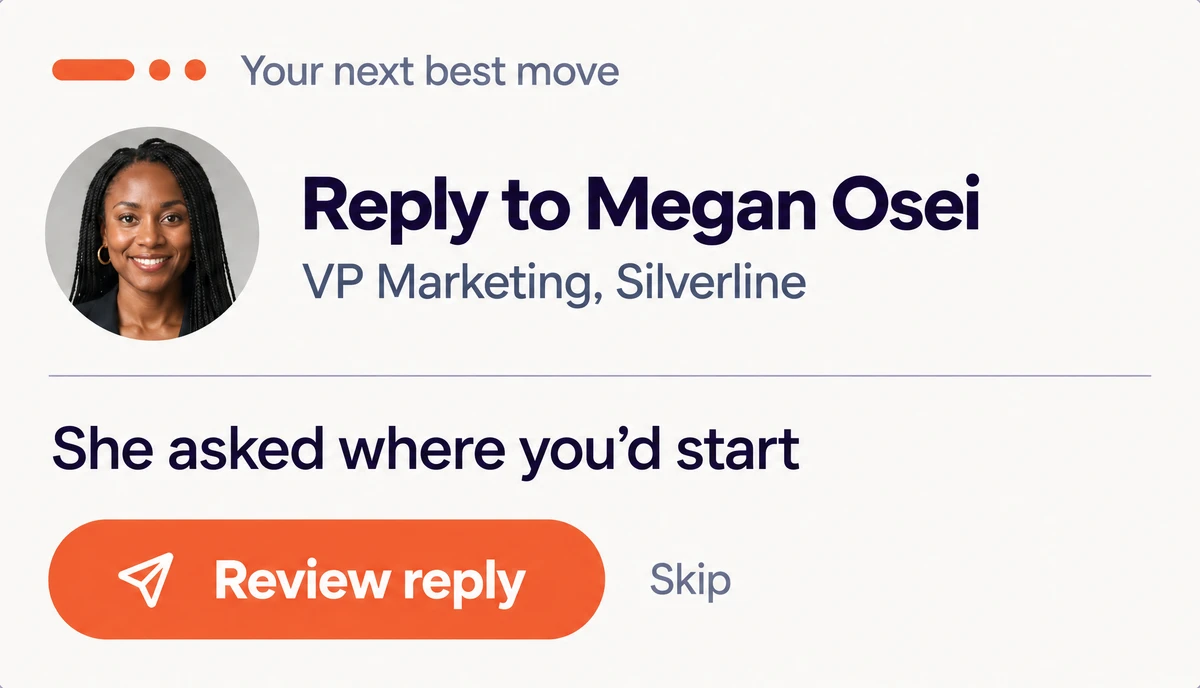
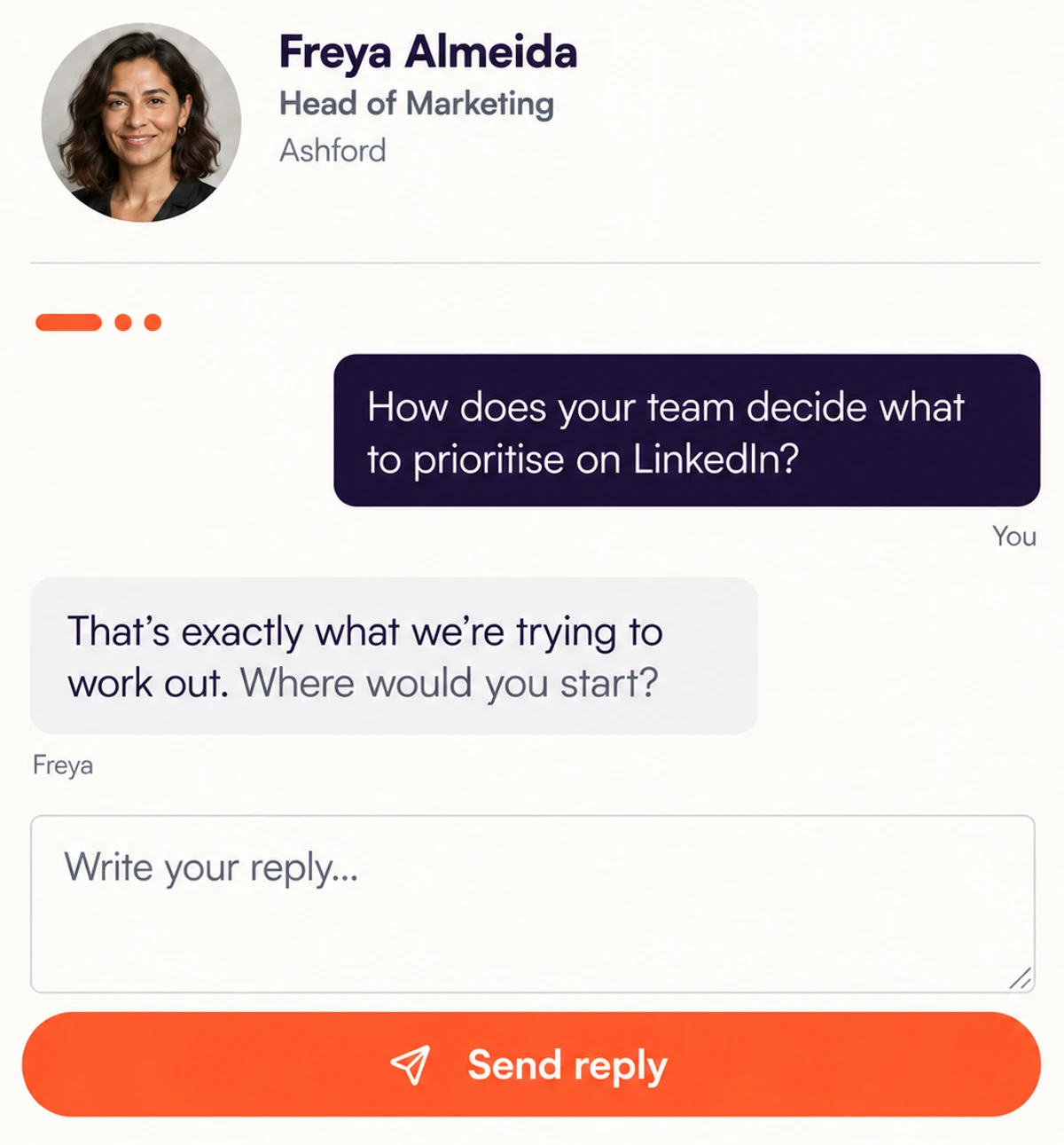
  Axel reshared your post To his 4,800 followers Reply to Megan She asked where you’d start Expected value
 Sophie Subject matter expert
-
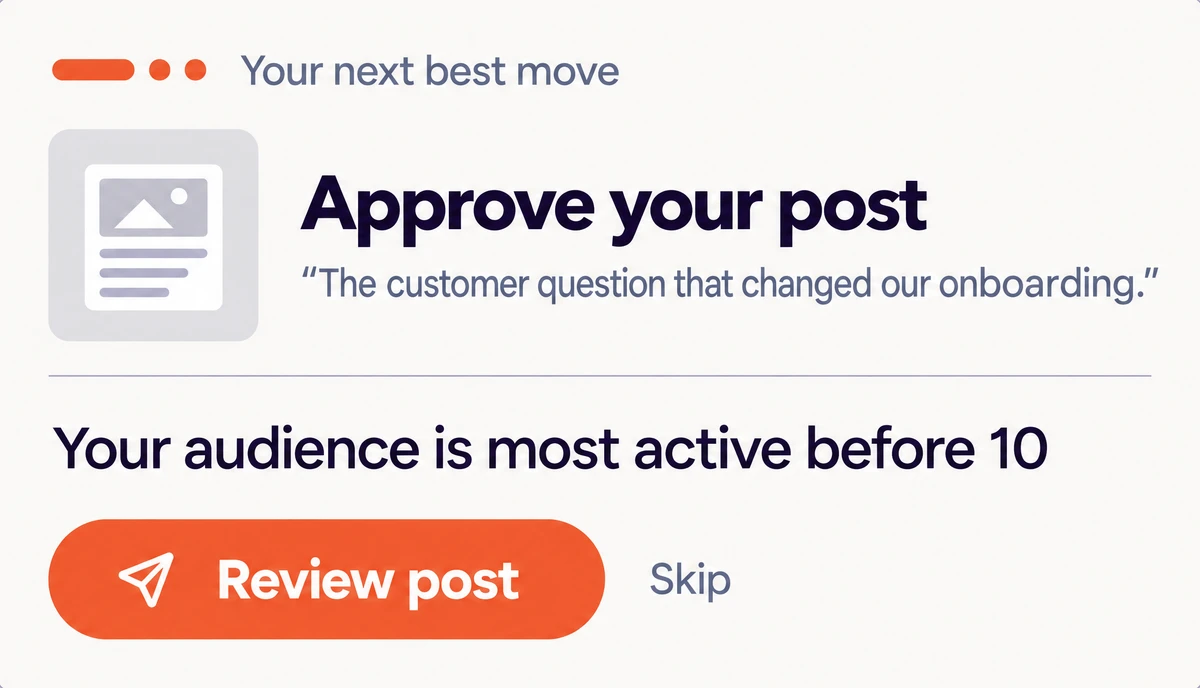
 Approve your post Drafted from your notes Expected value Post approved Out at your best hour 18 comments in an hour Your best start this month Reshare Sophie’s post Her audience overlaps yours Expected value Reshared Sophie’s post, with a line of yours
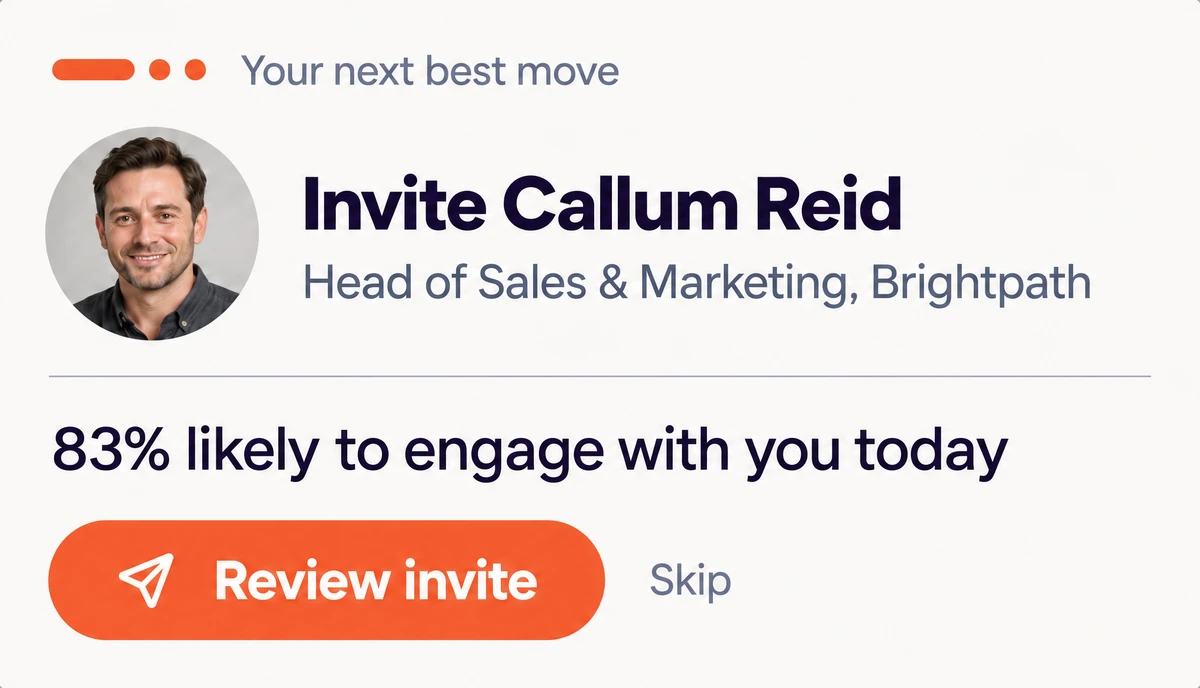
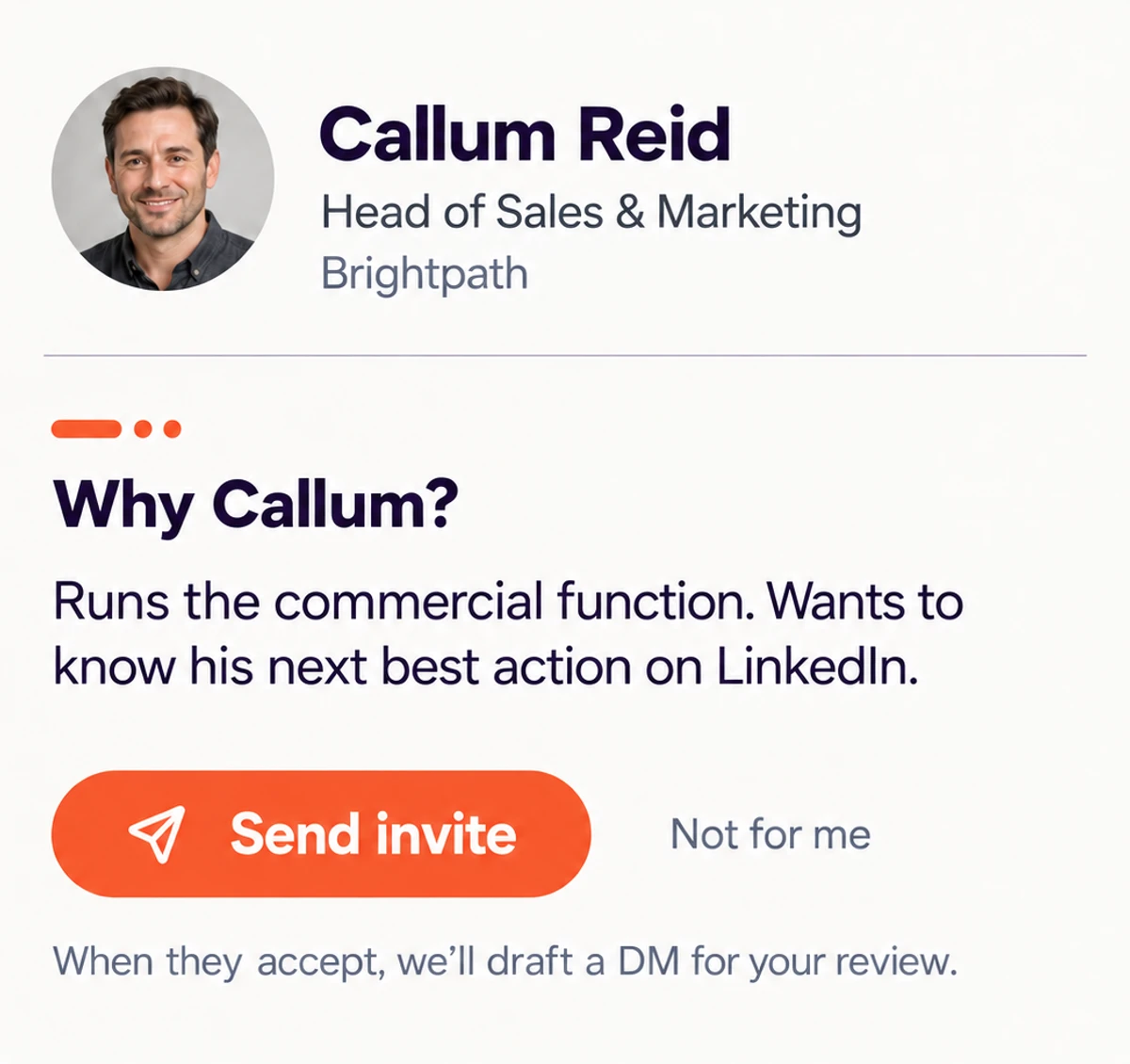
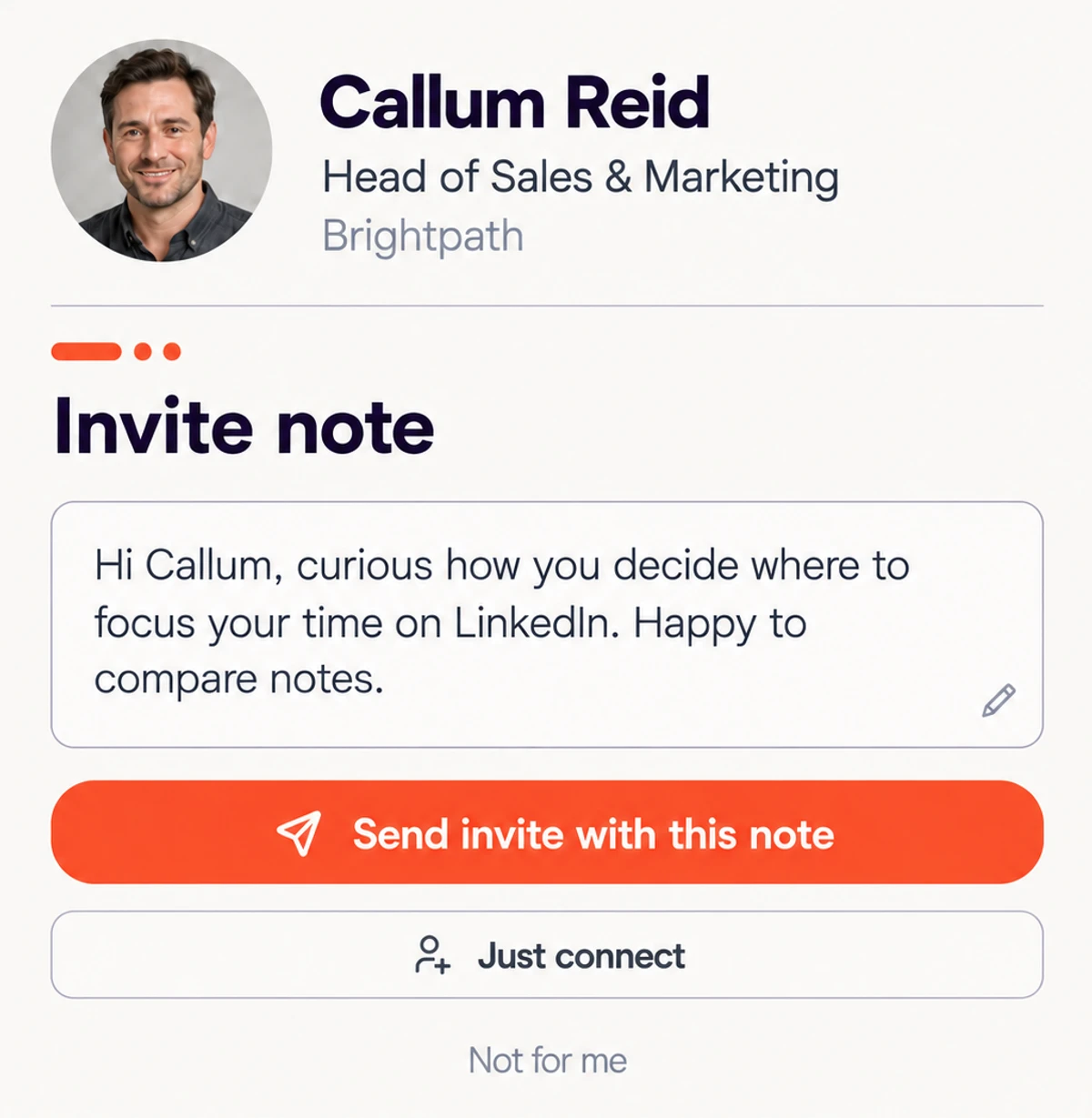
 Callum Reid viewed you Twice this week Add Callum Reid Head of Sales & Marketing Expected value
 Axel Executive
Many tools.
One Drumbeat.
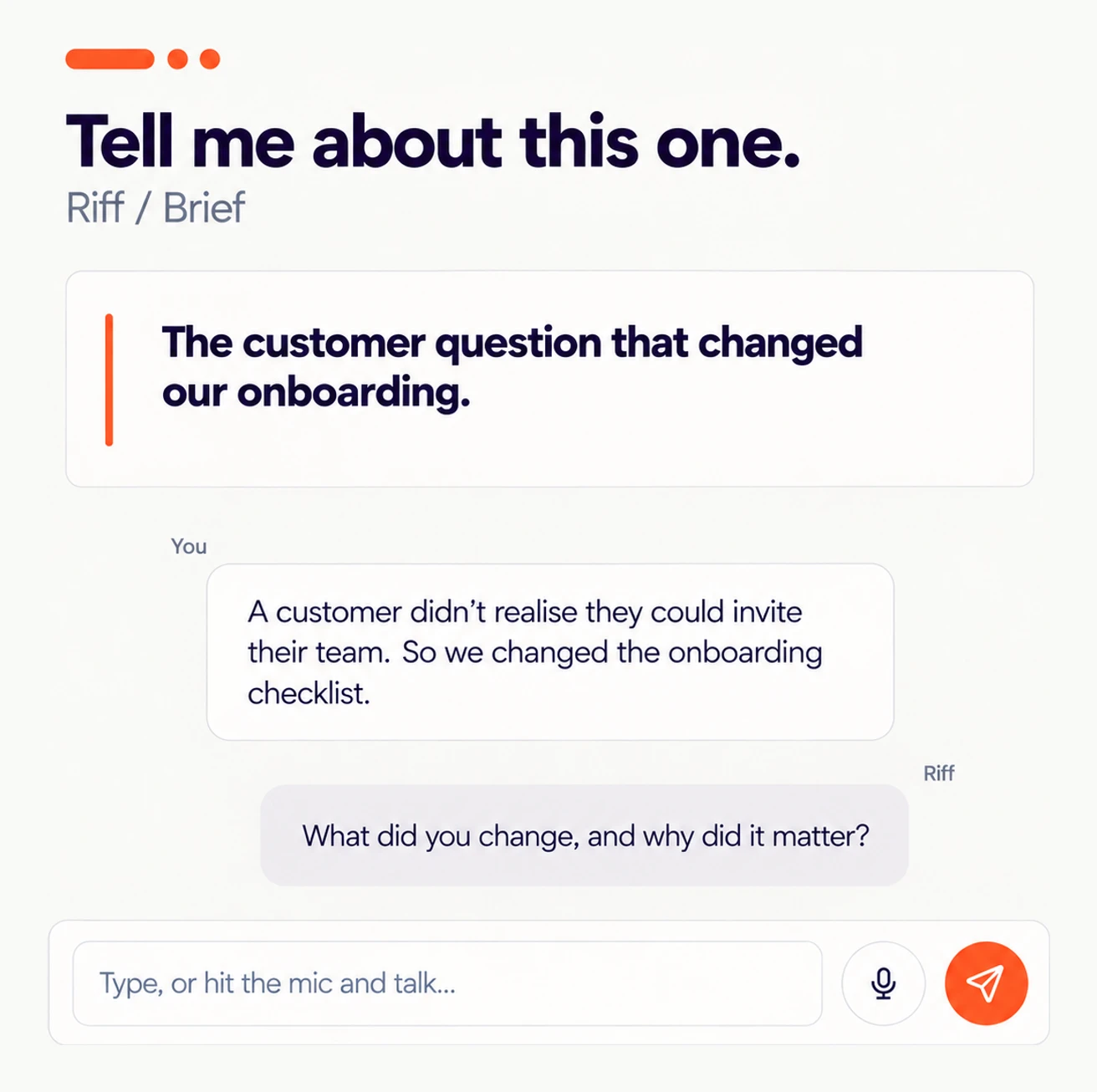
Four screens do most of the work: Setlist, Radar, Riff and Conversations. Here’s what each person on your team actually sees, and does.
Setlist
6× more posts per week
From one post every six weeks to nearly one a week
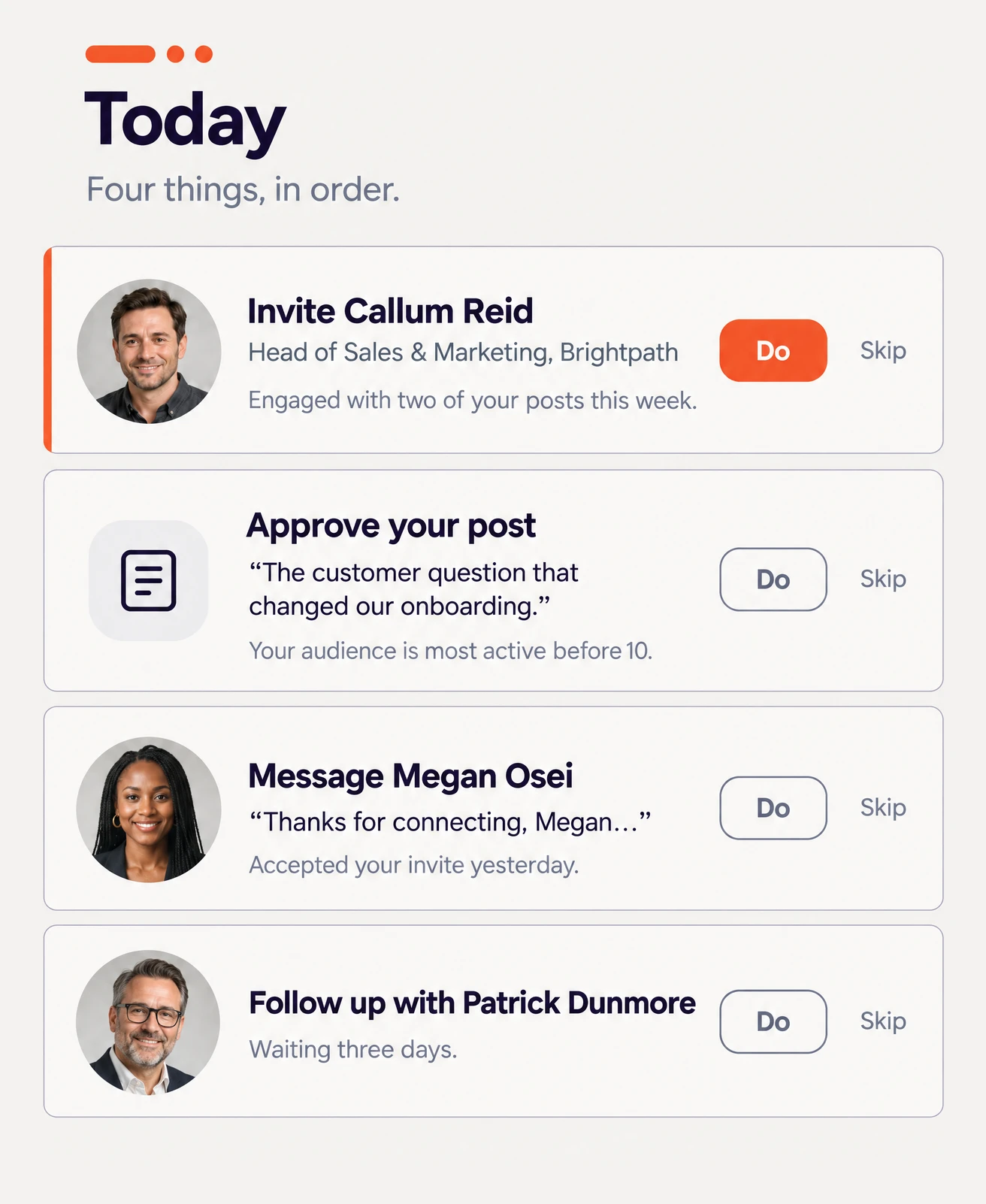
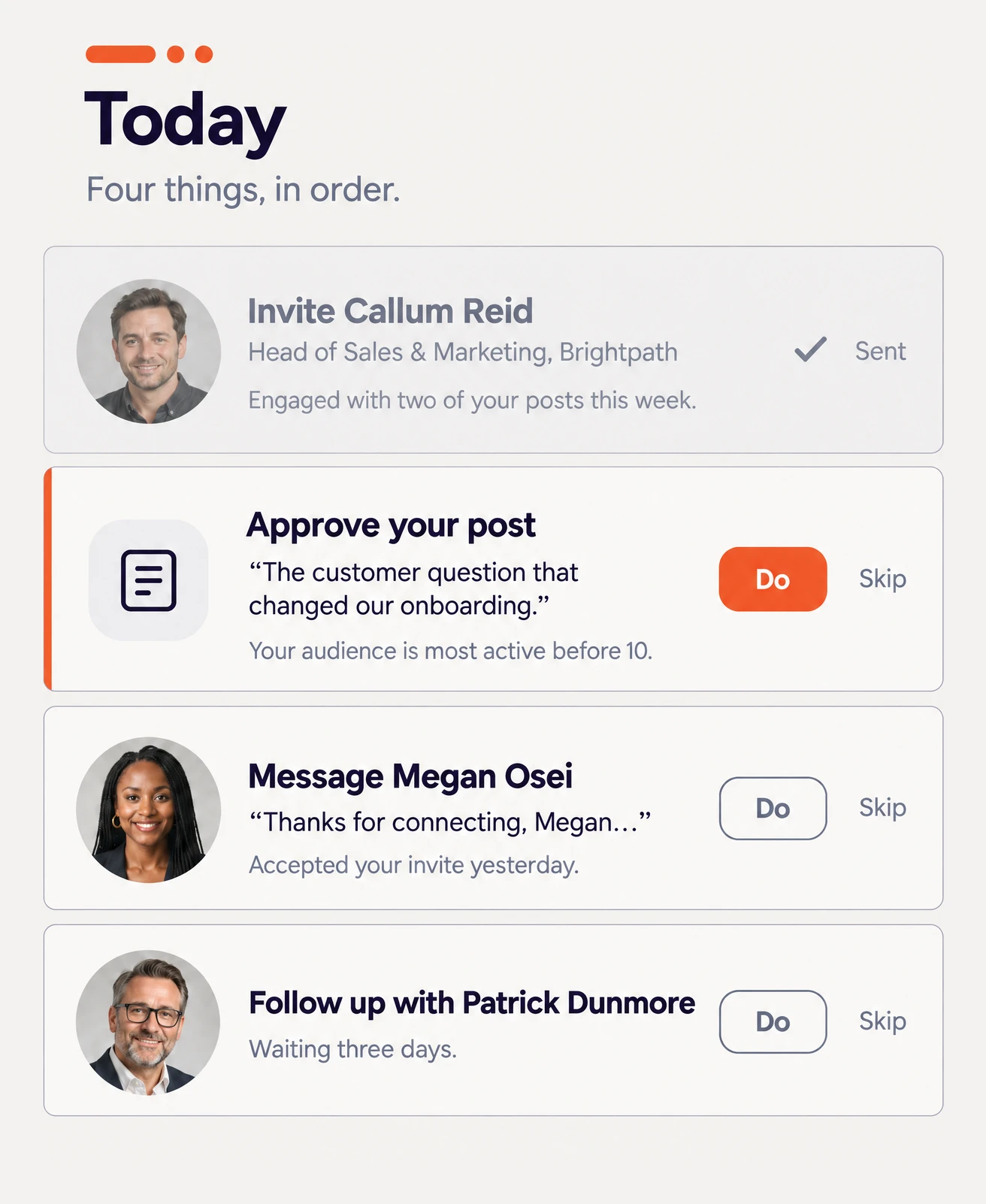
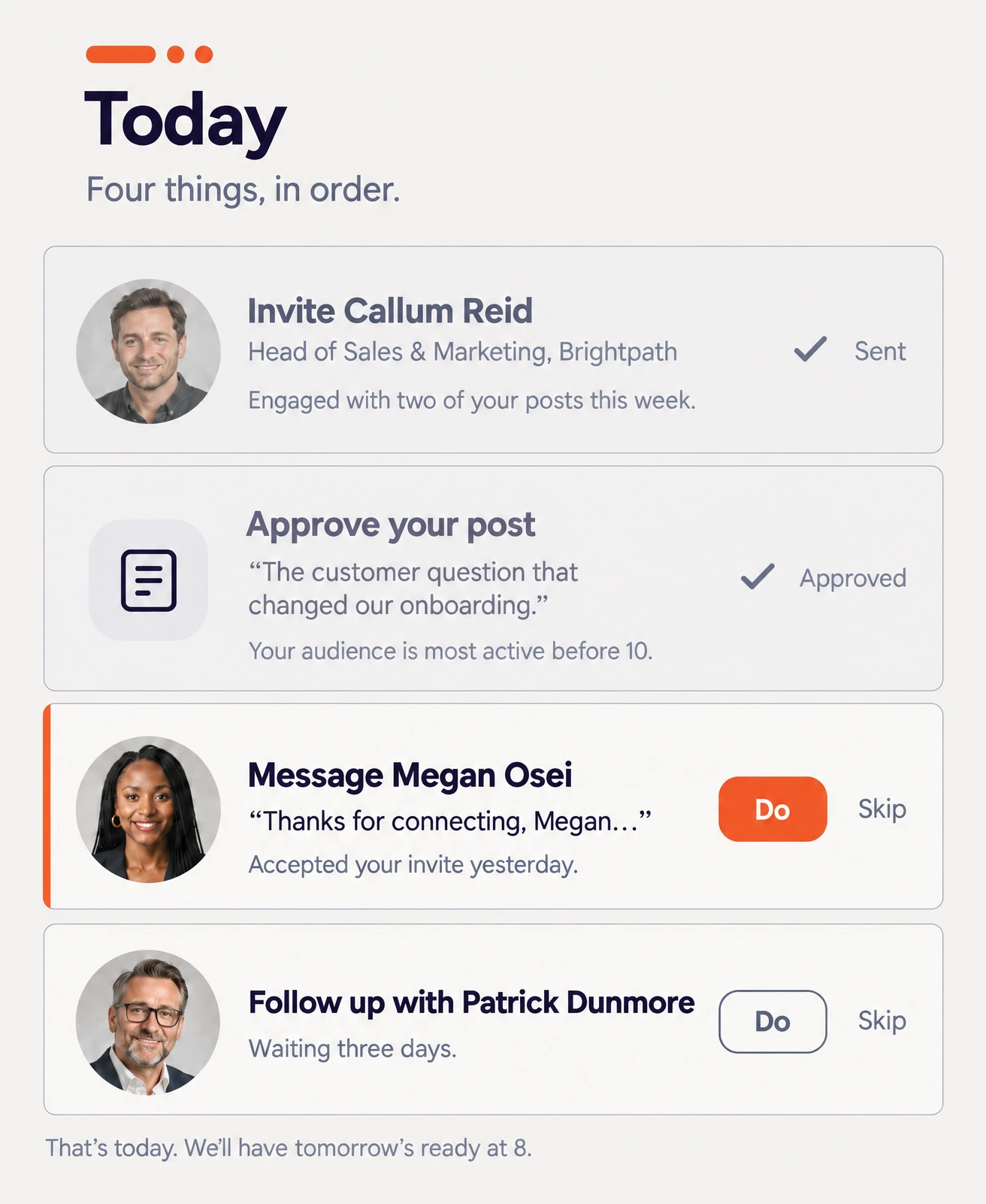
What changes when you use Drumbeat?
Four things, in this order.
-
More people posting
6× more posts per week
Especially the subject-matter experts you wish would post more. From one post every six weeks to nearly one a week (0.16 → 0.99).
-
Networks that grow
+50% more likely to accept your invite
When a prospect has engaged with a colleague’s post: 58% acceptance against 39% cold. Deeper into your industry, prospects and customers.
-
More conversations
6 days to a rep’s first conversation
Median, from their first invite. 83% of reps have their first conversation inside 30 days.
-
More pipeline
10.6 conversations a month for daily users
Daily users average 10.6 conversations a month. What each one is worth is your number, not ours.
Against the LinkedIn average
What teams on Drumbeat get from the same LinkedIn everyone else uses, measured against published outreach benchmarks.
2.7× the replies, and the conversations, of the average
-
Invites accepted
1.9×
-
Messages replied to
2.7×
-
Conversations per 100 invites
2.7×
The LinkedIn average is a blend of published outreach benchmarks (how it’s derived is in the FAQ). Drumbeat figures pulled from production, September 2026.
Impressions typically 50% higher than traditional posts, with greater reaction and interaction from outside the usual sphere. Rather than just existing clients and friends liking posts, they also drew reaction from the 80% of LinkedIn contacts who I don’t currently do business with.
 Ben YatesDirector, BY Design
 Drumbeat has been a bit of a gamechanger. It cuts through the noise. Smarter and more efficient than cold outreach, and it’s delivering positive outcomes.
 Jack WrigleyPresident, Omnivery
For the people who need LinkedIn to work.
Explore by role
- Sales Sick of not knowing who to invite, when to invite them, or what to say, and not having the time to do any of it? Drumbeat tells your reps who, when and what. They will love you for it.
- Marketing LinkedIn is where your ICP is. But no one’s using it enough, and when they do there’s no measurable ROI. That changes with Drumbeat.
- Subject matter experts You’re an expert, not a thought leader. Drumbeat helps you post things that are actually useful, without sounding cringey or like AI.
- Executives Your words travel further than anyone else’s. Use your profile to grow the business: every post becomes leads for your team, and nobody has to chase you to follow up.





Explore by industry
- Professional services Consultancies, investment banks, accountants and more. LinkedIn is where all your customers and prospects are, so you need to be there too. With Drumbeat, you don’t have to spend all day on it.
- Technology & infrastructure Your sales cycle is probably six to twelve months. Most commercial effort chases quick wins. Drumbeat balances short and long term to build your book now, next quarter and beyond.
- Niche B2B Extremely niche target? No problem. Drumbeat finds the people who buy, and the people who influence the buyers, however complex, small or unusual your market is.
- Events & exhibitions You need to sell stands and sponsorships and get people through the doors. Drumbeat does both, and they help each other: invites, DMs and posts that turn into visitors and square metres.





Questions about Drumbeat
How much does it cost, and how do we roll it out?
Drumbeat is priced on the size and scope of your rollout. Most teams roll out in phases, the first usually five to ten people. Larger organisations tend to begin with one team and bring in the rest in later phases. See how pricing works.
If Drumbeat delivers one good lead a month, it’s paid for itself. Pretty simple maths, really. Let’s figure out the shape together: book a demo and we’ll discuss.
Will my team actually use it?
Yes. This isn’t another Salesforce dashboard they have to use (and hate using).
47% of Radar sessions start before 11am. Drumbeat is the first tab of the working day. That’s roughly the share of people who check Instagram before they’ve got out of bed, just with far less doom-scrolling. And the early birds start twice as many conversations.
Is Drumbeat just another LinkedIn automation tool?
No. Drumbeat doesn’t automate your LinkedIn. Whoever told you to automate LinkedIn hasn’t done the maths: send 100 automated invites and about 3 turn into conversations. The other 97 remember your name for the wrong reasons. Buyers are sick of automated digital mosquitoes and AI slop. See the maths.
What Drumbeat automates is the decision of what to do next, using some very powerful mathematical models. Then it helps you take that next best action as well as possible. Nothing goes out that you haven’t approved.
We believe in human-first AI, not AI-first humans. Think Iron Man suit, not robot.
What signals does Drumbeat track?
All of them, and none of them on its own. Radar doesn’t look for one LinkedIn trigger and call it intent. It combines behavioural, profile, company, account and network evidence, then uses separate prediction models to decide who matters most today, and why now.
Signals are inputs, not answers. Radar’s job is to predict the next best person to act on from all of them.
What goes in, and what comes out
The relevance model evaluates over 100 derived features across:
- Engagement. Likes, comments and replies around relevant industry voices, competitors and your own team’s content.
- Recency and depth. Repeated engagement, comments against likes, and how recently it happened.
- ICP fit. Role, seniority, geography, company size and several parts of the person’s profile, against your ICP.
- Account context. Whether someone works at a named or active target account, and what is already happening around that company.
- Network and profile. Existing relationship, seniority, connections, followers and other profile characteristics.
- Triggers. Events such as a role change add supporting evidence. They do not drive the ranking on their own.
None of that is collapsed into one generic intent score. Radar makes two separate predictions.
- Would this rep actually want to connect with this person? Radar learns from who the rep sends to and rejects, so it becomes increasingly personal to how that rep defines a good prospect.
- If they send an invite, how likely is this person to accept? A separate model learns from real connection outcomes: engagement depth, recency, source, seniority and network characteristics.
The separation matters. Someone can be a perfect ICP match and unlikely to connect, or highly likely to connect and commercially irrelevant. Radar combines the two predictions with the evidence beneath them to decide who deserves attention today, and why.
Then it keeps improving. Your team posts, people engage, Radar observes it, predicts who matters, the rep acts, and the outcome improves the next prediction.
Will Drumbeat get me flagged as AI slop?
Short answer? No.
Long answer
AI slop isn’t quite what people think it is. It’s not “anything AI helped with”. AI slop means crappy content, powered by AI. Slop existed long before AI. Now anyone can make it.
The problem with slop isn’t the writing. AI writes better than most humans. The problem is that if the idea is bad, the best writing in the world won’t save it. Garbage in, garbage out.
This is where Drumbeat is different. Riff helps you dig ideas out of your own head or the outside world and bake them into a fully formed one. Once that’s done, the writing is the easy part.
And it works: the posts that do best on Drumbeat are the ones people tweak a little, not rewrite. A light polish gets 2.1× the engagement of a heavy rewrite, 1.8× the impressions, and 52% fewer posts that get nothing at all.
Will Drumbeat’s content actually sound like me?
Yes. Posts and messages both.
AuthorDNA learns how you write from what you’ve already written: rhythm, vocabulary, how you open, how you sign off (243 measures of it). Every draft is scored against them before you see it. Anti-Slop then strips the tells: the “it’s not X, it’s Y” constructions, the tidy triplets, the words nobody says out loud.
You edit whatever you like, and nothing posts or sends until you’ve approved it. The posts that do best are the ones people tweak a little rather than rewrite (2.1× the engagement), which is the point: it should arrive nearly right.
Messages get one more pass. They’re optimised for a reply by the team that built Phrasee and spent a decade doing exactly that for the world’s biggest brands. Your voice, tuned for a response.
Can we control who Drumbeat targets and what our team talks about?
Both, and in detail.
Who. Each person sets their own ICP (geography, sector, company size, role and seniority), plus named target accounts, exclusion lists (competitors included) and watch lists of the competitors and influencers whose audiences you want. A lead only ever goes to one person on your team.
What. Campaigns is where Marketing sets what the team should be talking about now: the theme, the source material and the key message, and Drumbeat turns it into activity that fits each person. Backstage is your company’s knowledge base: what you sell, who you sell to, the source material you want drawn on. Every idea, post and message is built from it. Facts are tagged public, one-to-one only or internal, so the right thing gets said in the right place and nothing internal ever ends up in a post.
Can Drumbeat measure LinkedIn ROI?
Yes. And here’s how.
- All your team’s post stats in one place. Right now you probably have no idea how many impressions, profile views or new followers your team’s own posting earns. Drumbeat fixes that.
- Every conversation your team starts. You probably don’t know that number either. Drumbeat tracks it.
- How the two connect. Drumbeat shows the impact your team’s posts had on the conversations they started: an ROI number for your team’s content, for the first time.
What are the “LinkedIn averages” on this site?
A basket of published LinkedIn outreach benchmarks that we put together, not a single study. Across them, cold invites are accepted about 29% of the time (28.5%, to be exact) and messages get a reply about 10% of the time; Expandi’s 2026 benchmarks are one of the sources. The “3 conversations per 100 invites” follows from those two: 100 × 28.5% × 10.4%.
Can’t I just build this in Claude?
Sigh. No.
And here’s why
You could ask Claude to log into your LinkedIn and pull a bunch of data. Except that’s against LinkedIn’s terms of service, and you’ll probably get in trouble.
- But even if you could do that… you’d need to know what your ICP is actually talking about this week, not what the internet is. That’s watching thousands of posts, comments and job changes across your team’s network every day, and weighting each one.
- But even if you could do that… you’d need to know which of your ideas is worth a post. An LLM will happily write up any idea. Riff judges an idea against what your ICP has actually responded to, then pushes you on the argument, the evidence and the angle until it’s fully formed. Only then does anything get written.
- But even if you could do that… you’d need to work out which people actually fit your ICP. LLMs are good at spotting the bad fits and poor at ranking the great ones. Comparing two lumps of unstructured language loses most of the nuance.
- But even if you could do that… you’d need to predict who is likely to respond. That isn’t a prompt. It’s a model trained on thousands of accepts, replies and dismissals. On day one you have none.
- But even if you could do that… you’d need everything written in your own voice, every time, without drifting into AI-speak. AuthorDNA scores a voice on 243 measures. “Sound like me” in a prompt is not 243 measures.
- But even if you could do that… you’d need messages optimised for a reply, not just written well. Language optimisation is probabilistic and built on outcomes. We built Phrasee; we know how long that takes.
- But even if you could do that… you’d need to stay inside LinkedIn’s limits, pace the invites, and make sure two colleagues never message the same person in the same week.
- But even if you could do that… you’d need it to turn up where people already work (email, Slack, Teams) every morning, with approvals and an audit trail, so nothing goes out that nobody signed off.
- But even if you could do that… you’d need your team to actually use it. The most expensive tool is the one nobody opens. Nearly half of Radar sessions start before 11am.
- But even if you could do that… you’d need every outcome to feed back into next week’s ideas, targets and messages, without leaking your company’s information into somebody else’s model.
So yeah. Give it a go in Claude. Then give us a call in a month and let’s compare notes.