A lot goes into your next best action.
Drumbeat brings together prospecting, content, conversations, company knowledge and team-wide LinkedIn intelligence, so what happens in one place improves what happens next, everywhere.

Setlist
The right things to do today.
Setlist takes everything Drumbeat knows and turns it into a short, ordered list of actions for each person. Everyone uses it; different people get different actions.
6× more posts per week
From one post every six weeks to nearly one a week
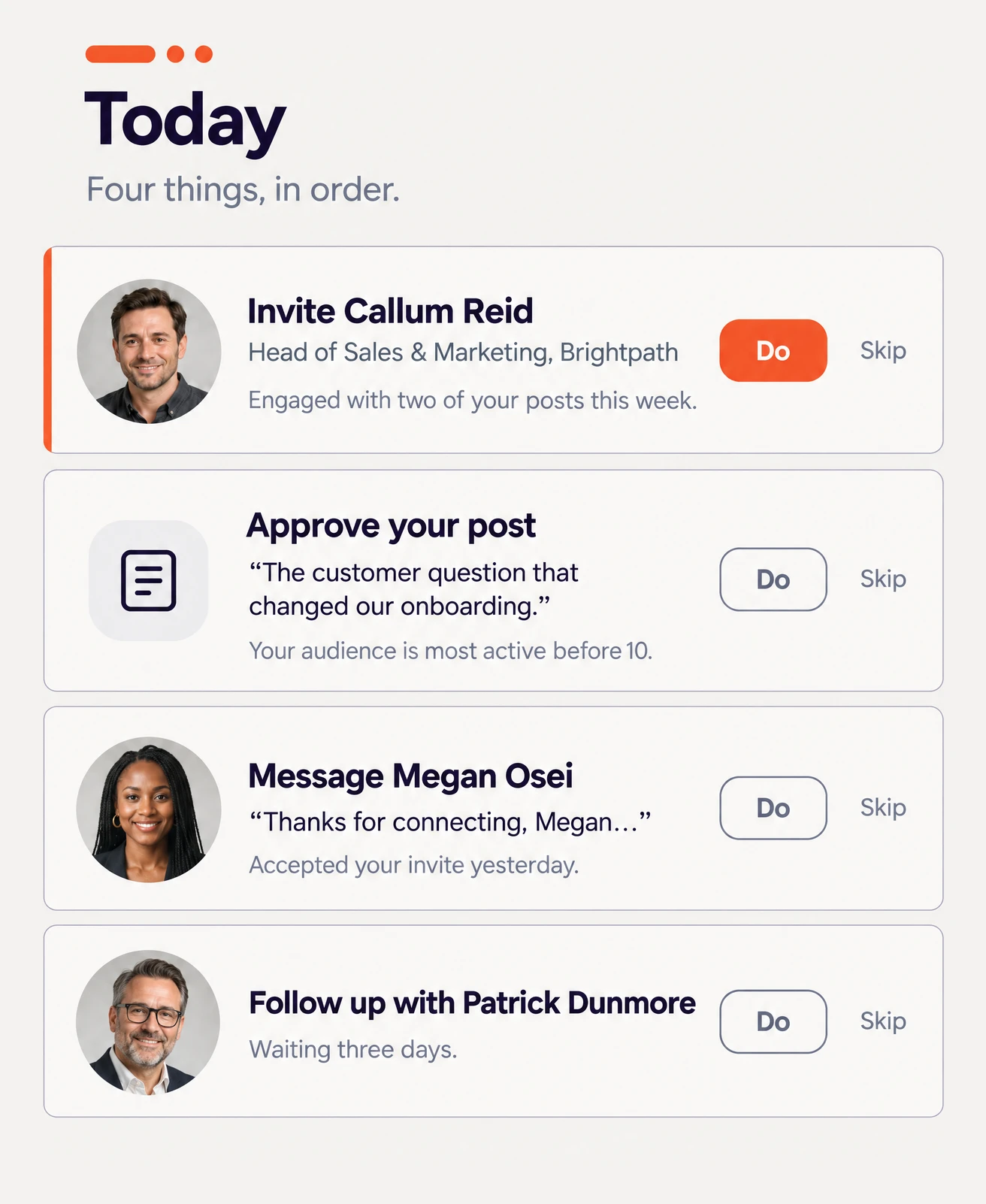
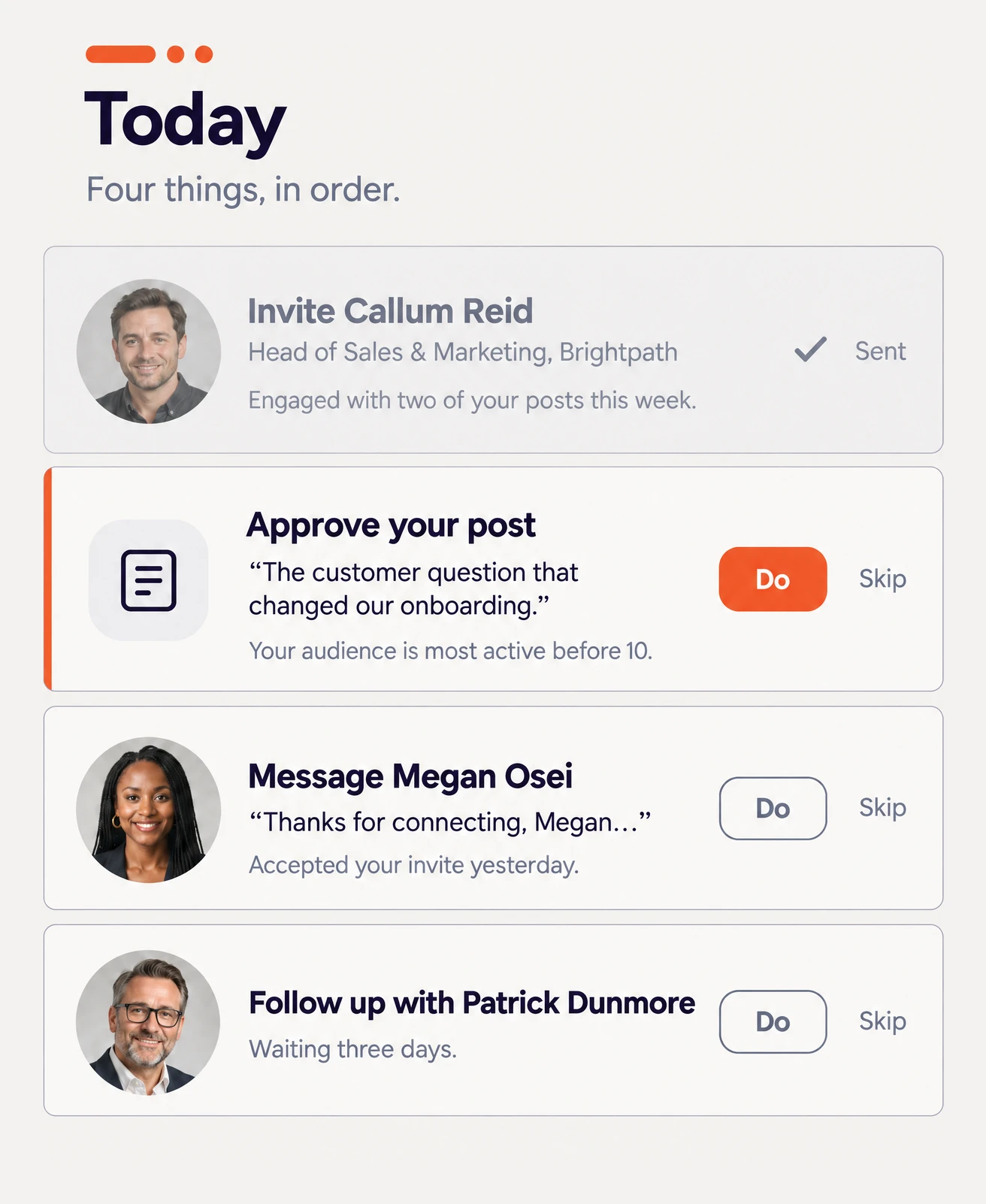
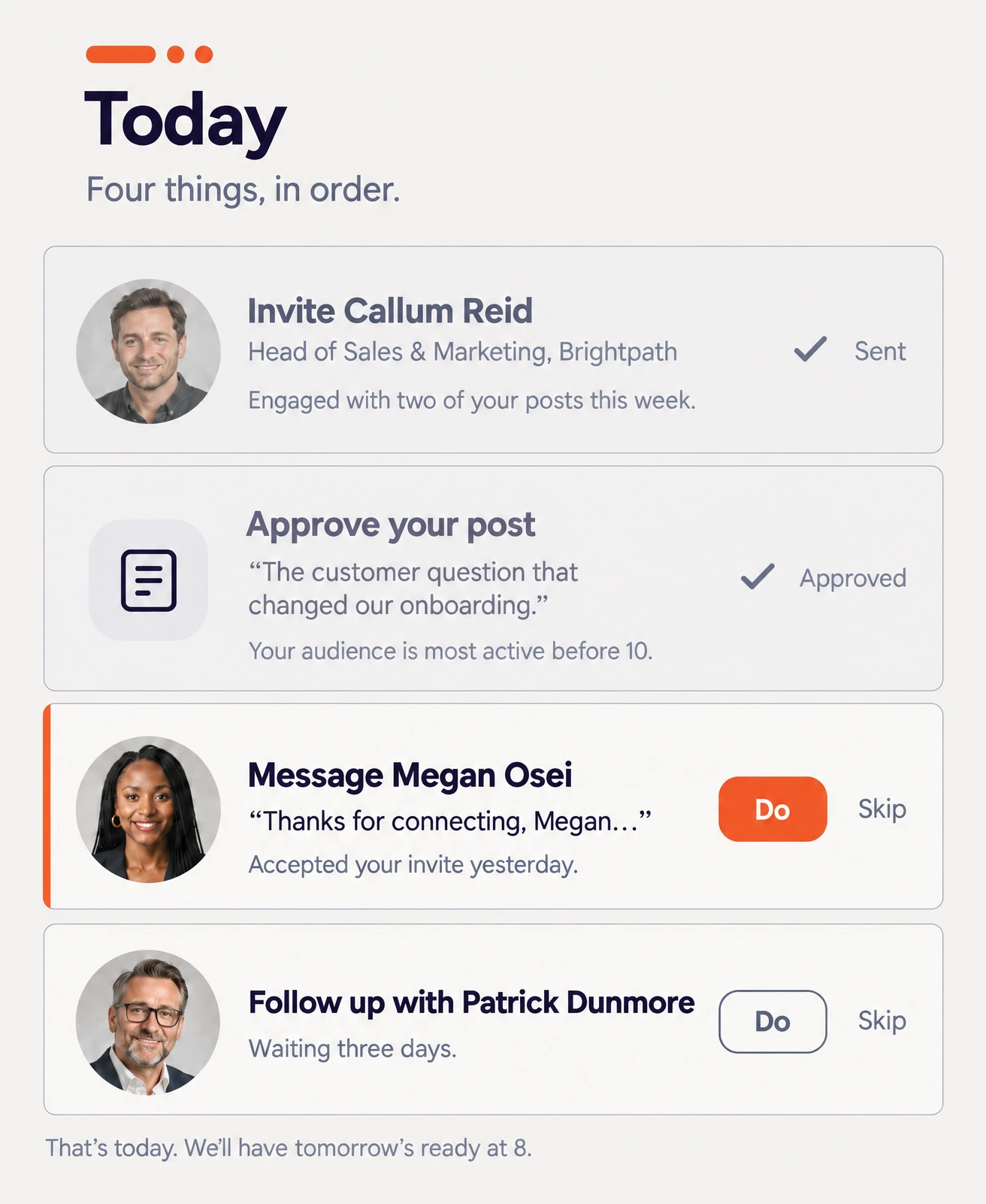
- Ranked daily actions Every possible action scored for what it is likely to be worth, best first.
- A reason for each Why this person, why this post, why now, attached to every suggestion.
- Review it The work is already prepared. Check it, change it if you want, and it’s done.
- Re-ranked as things change Through the day, and as it learns from what you do and skip.
How Setlist prioritises your day
Every action Drumbeat could suggest gets a score for what it is likely to be worth, and a check against what is allowed: platform limits, who has already been contacted, what is off limits for your team. The list you see is the ranked remainder, refreshed as things change, and it learns from what you do and skip.
Radar
Find the right people. At the right time.
Radar predicts who you should connect with now, rather than everybody who matches a job-title search. It uses maths to work out who is most likely to talk to you today, instead of firing off an automated three-step spam sequence.
53% of invites accepted
LinkedIn average: 29% 1.9×
- Fit, properly modelled Relevance to the nuances of your ICP, not just a job-title filter.
- Likely to accept Acceptance predicted before you send, and who is most worth it if they do.
- Buying-committee context Who else is involved, and who on your team already knows them.
- Learns as you go Your invites, accepts, dismissals and DMs teach the model to get better every day.
Riff
Find something worth saying before you start writing.
Riff works out what your audience cares about, what you have a credible point of view on, and what needs to go into an idea before it becomes a post.
3.5× the engagement, from people who used to post once every six weeks
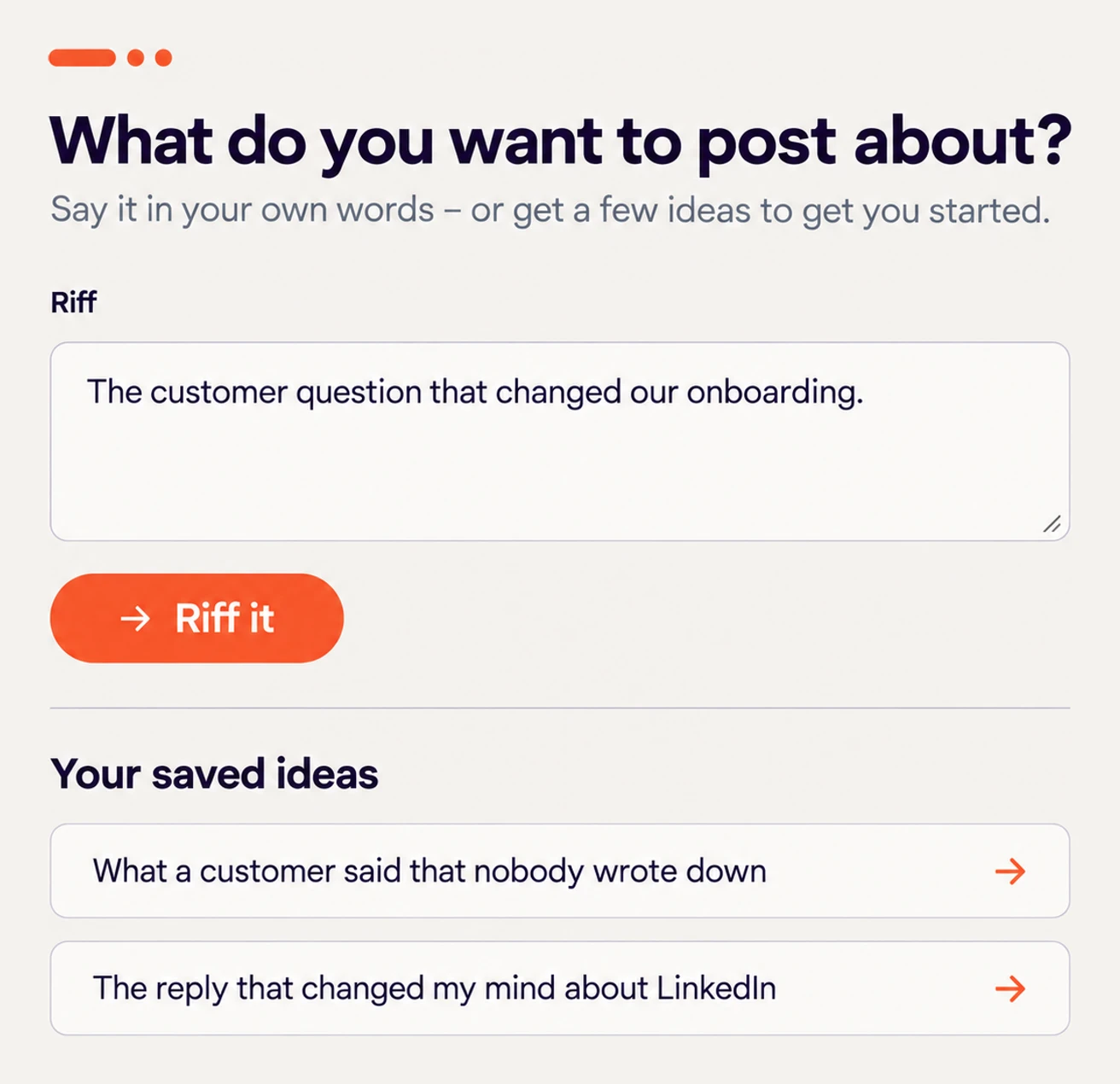
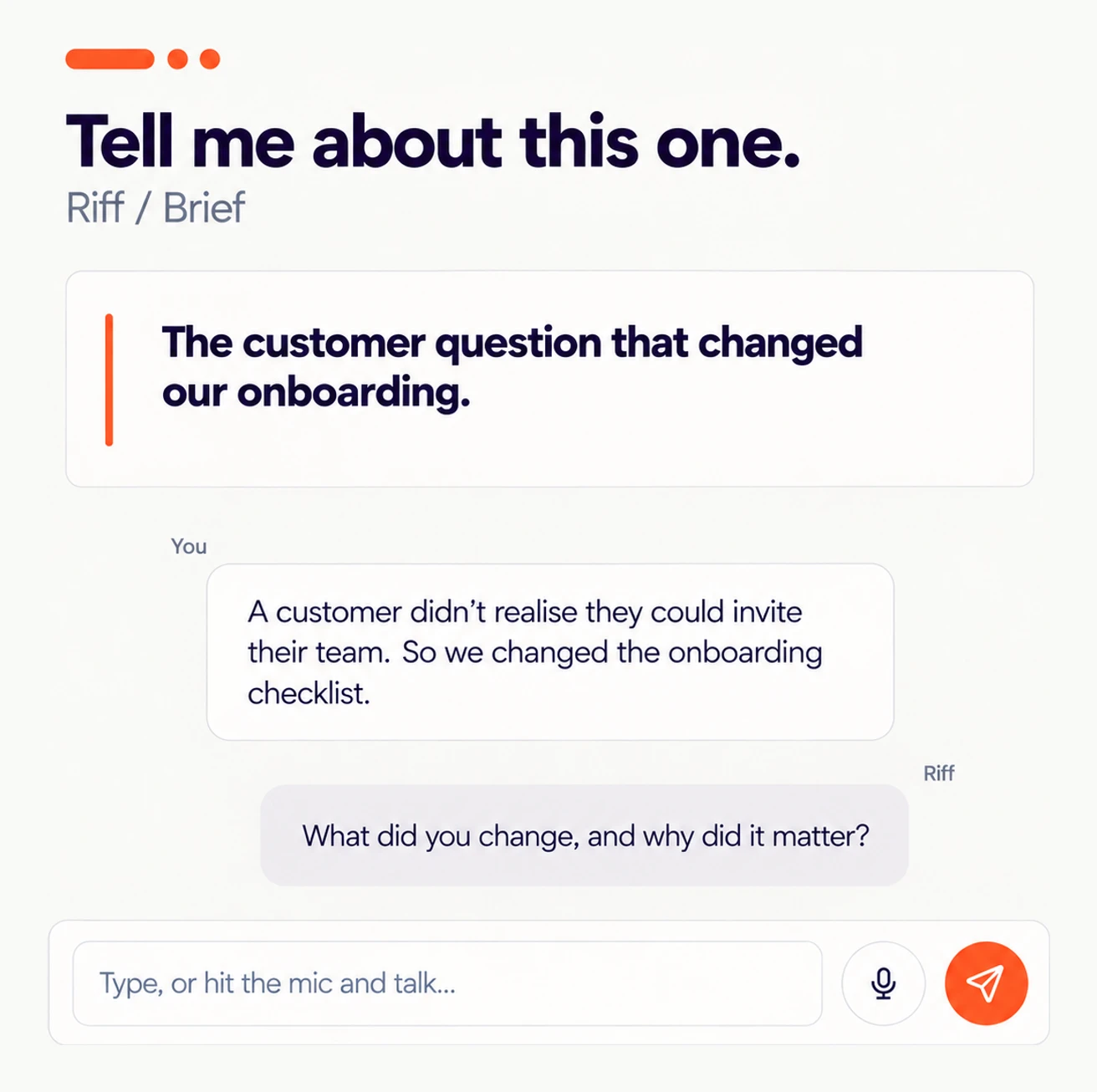
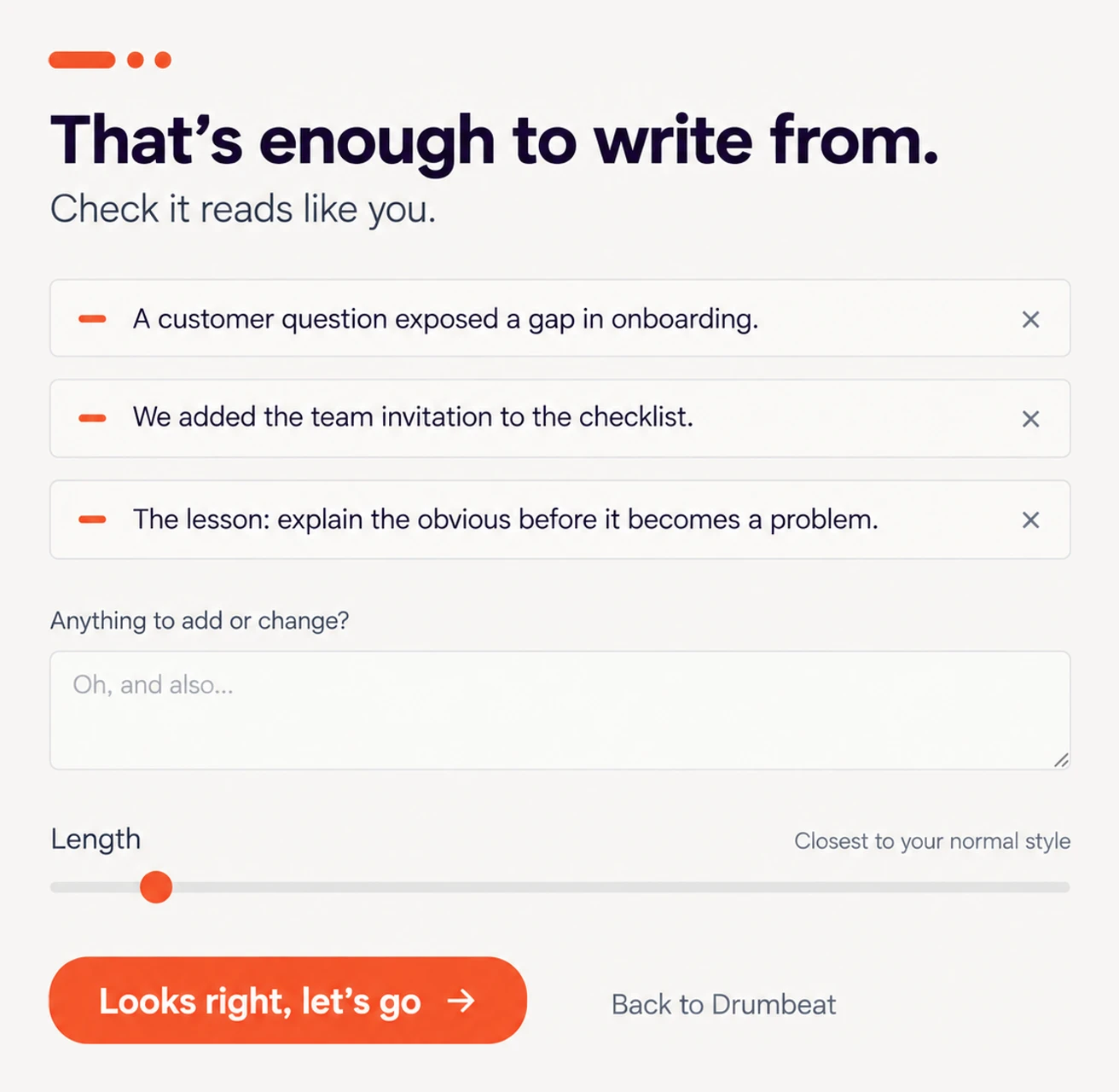
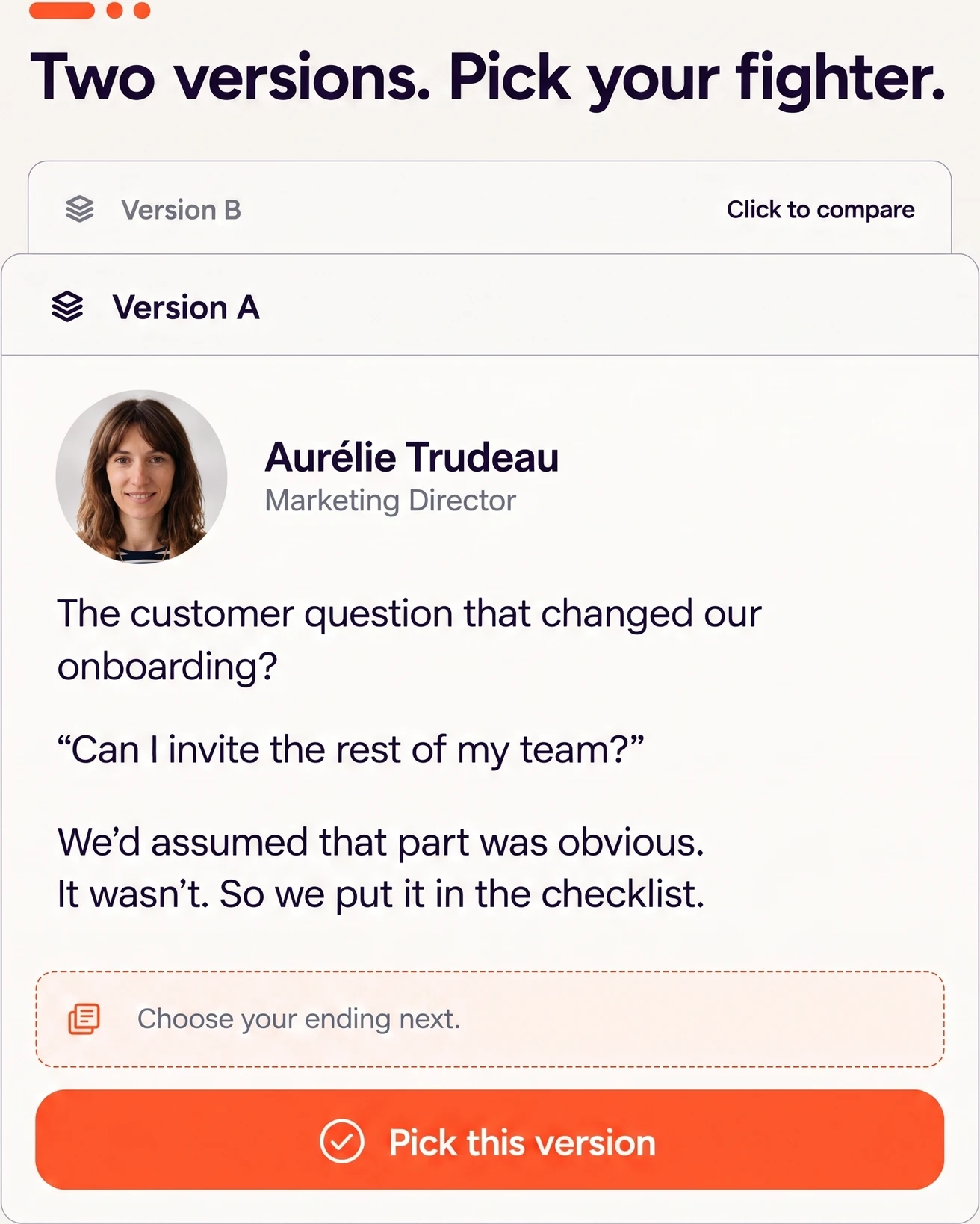
- What’s moving in your market Industry news and shifts, found for you and matched to what you actually know.
- Ideas that matter Every idea is scored for quality before you see it, and the model keeps learning which ideas your audience responds to.
- Style and substance Our models check an idea has enough in it to make a good post before a word is drafted.
- Framed and timed A data-driven workflow shapes each post so it travels furthest with the people who matter.
How Riff learns
Riff isn’t one fixed prompt or one fixed recipe. It tests, learns and adapts how content is developed, based on evidence from real posts: which creative approaches perform, which openings travel, and when each person’s audience is listening. It also works out when content should appear, rather than forcing everyone into a rigid recurring calendar.
AuthorDNA
Every draft sounds like you. None of it sounds like slop.
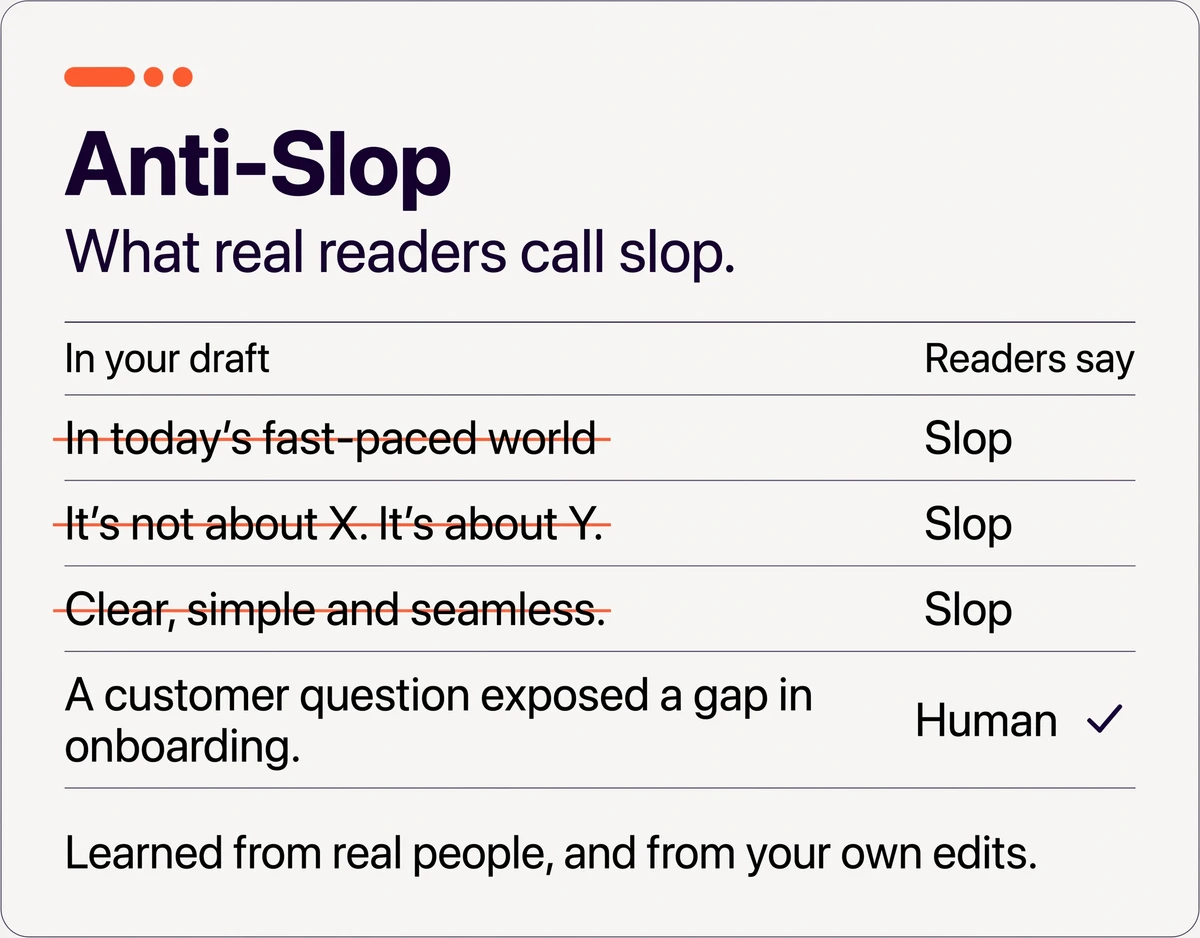
AuthorDNA learns how each person writes, and scores every draft against it before they see it. Anti-Slop learns what real people think is slop, and strips it out at source.
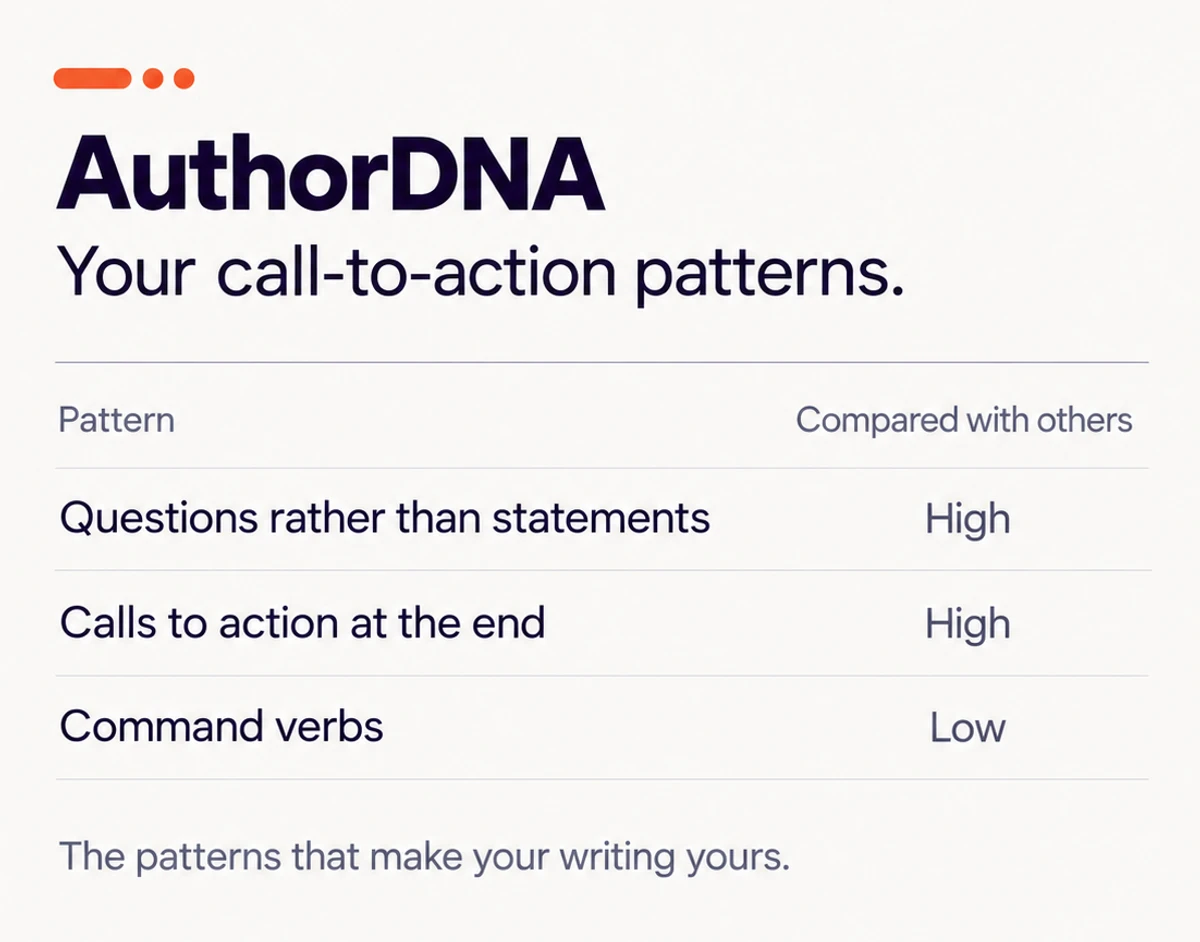
- 243 measures of your voice Rhythm, vocabulary, how you open, how you sign off.
- Scored before you see it A draft that doesn’t sound like you doesn’t reach you.
- Anti-Slop Learns what real readers call slop, and strips it out before the draft reaches you.
- Keeps adapting To your edits and preferences, and to what everyone else’s readers flag.
Campaigns
Turn a marketing priority into team-wide LinkedIn activity.
Set the campaign, add the source material and the key message, and Drumbeat turns it into LinkedIn activity for the right people when it matters most. Campaigns sets the direction. Riff makes it personal, so nobody posts the same thing.
1.9× more likely to start a conversation when a prospect has engaged with your team’s content
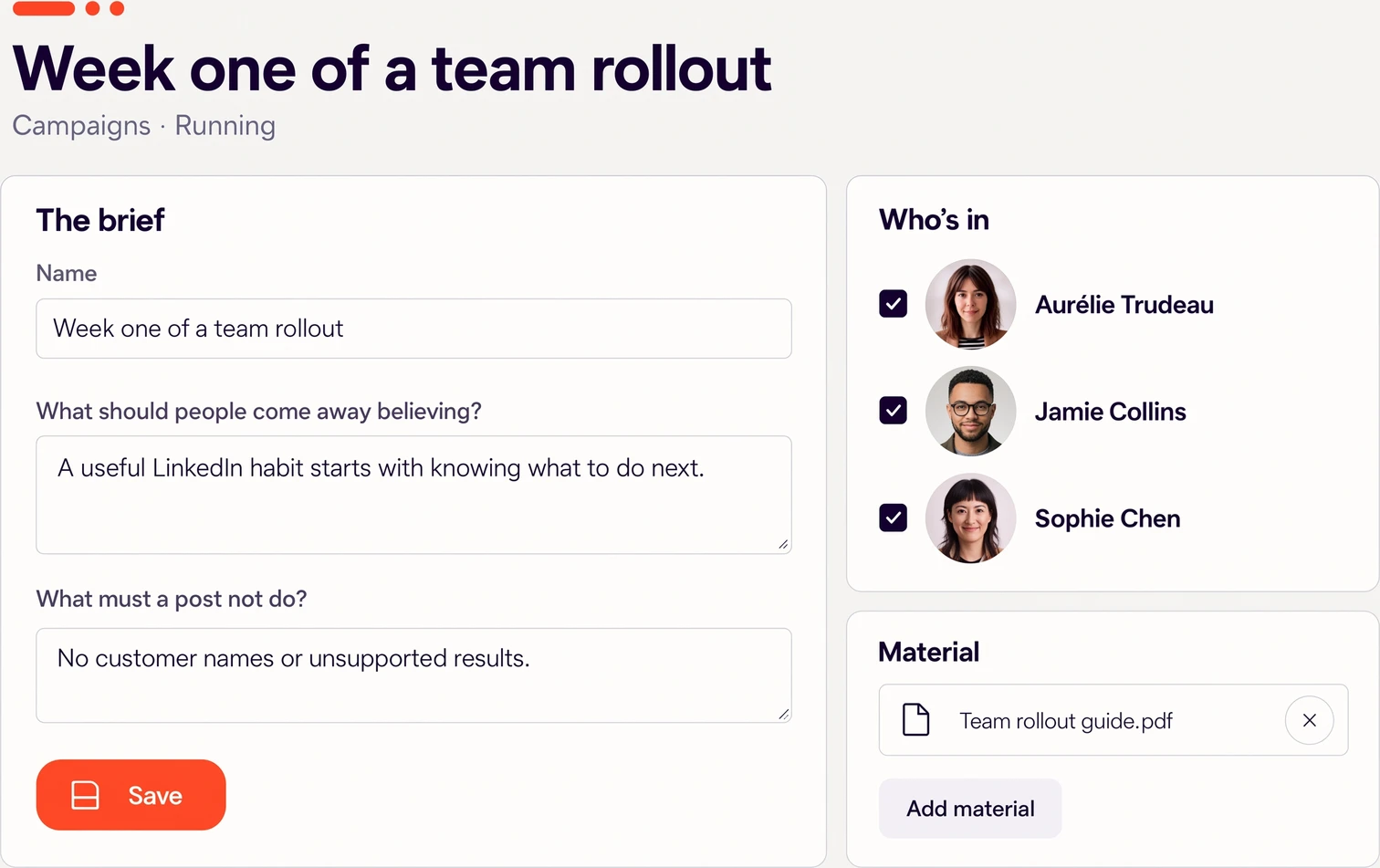
- The brief and the material Themes, key messages and source material every post draws on.
- The right people Who should take part, and in what way, across the team.
- The right format An original post, commentary or a repost, whichever fits the person and the moment.
- Participation and performance Who took part over the campaign window, and what it did.
Original posts, commentary or reposts?
Reposts are possible, and not always advisable. Drumbeat will recommend an original post, commentary or a repost depending on what fits the person and the moment, and it uses the data on what actually lands to help you make the better call.
Conversations
Know what to say, when to say it, and when to take it offline.
Drumbeat surfaces the moments when a LinkedIn connection is becoming commercially useful, helps prepare the next step, and recognises when the conversation belongs in your pipeline.
6 days to a rep’s first conversation
Median, from their first invite
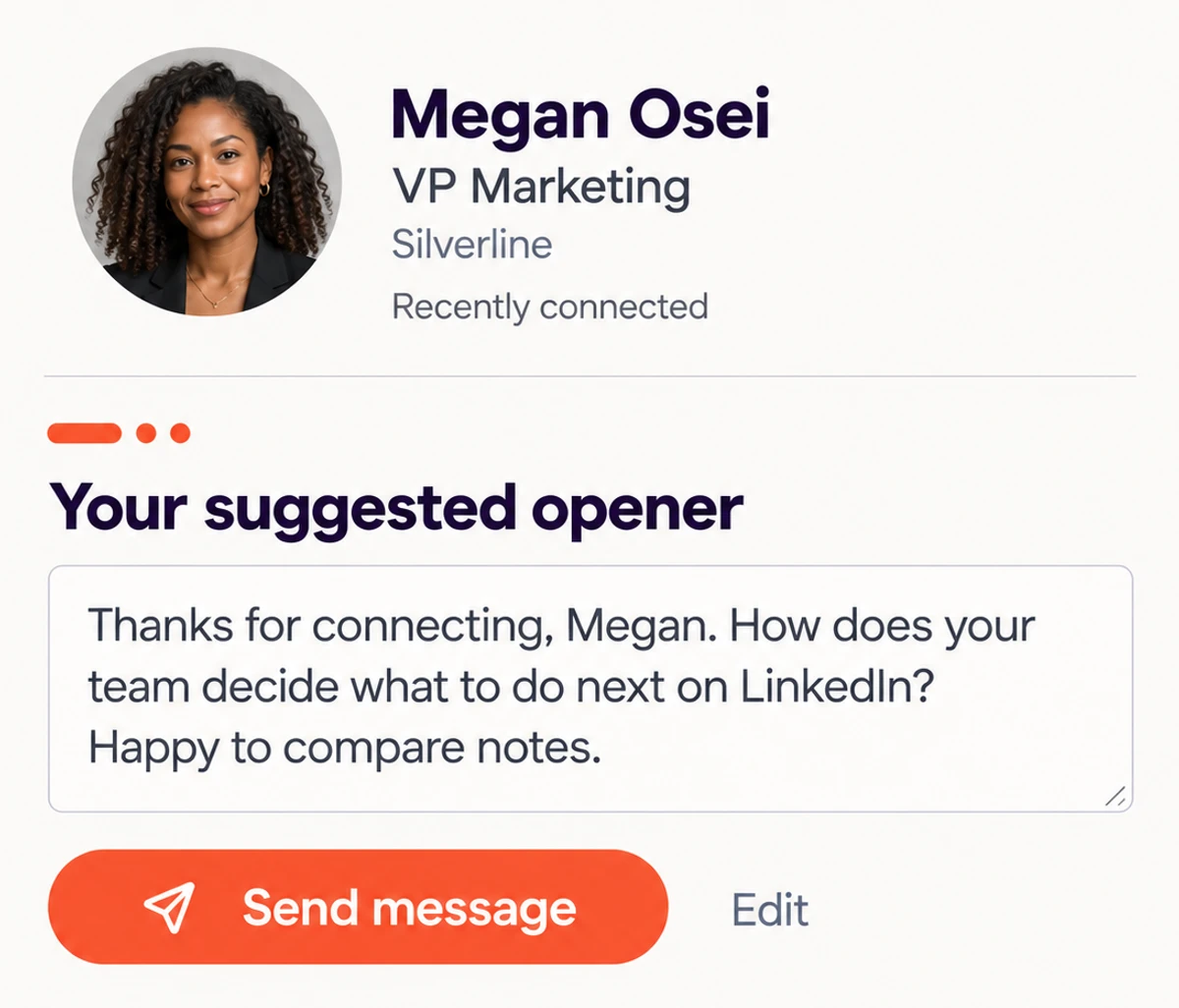
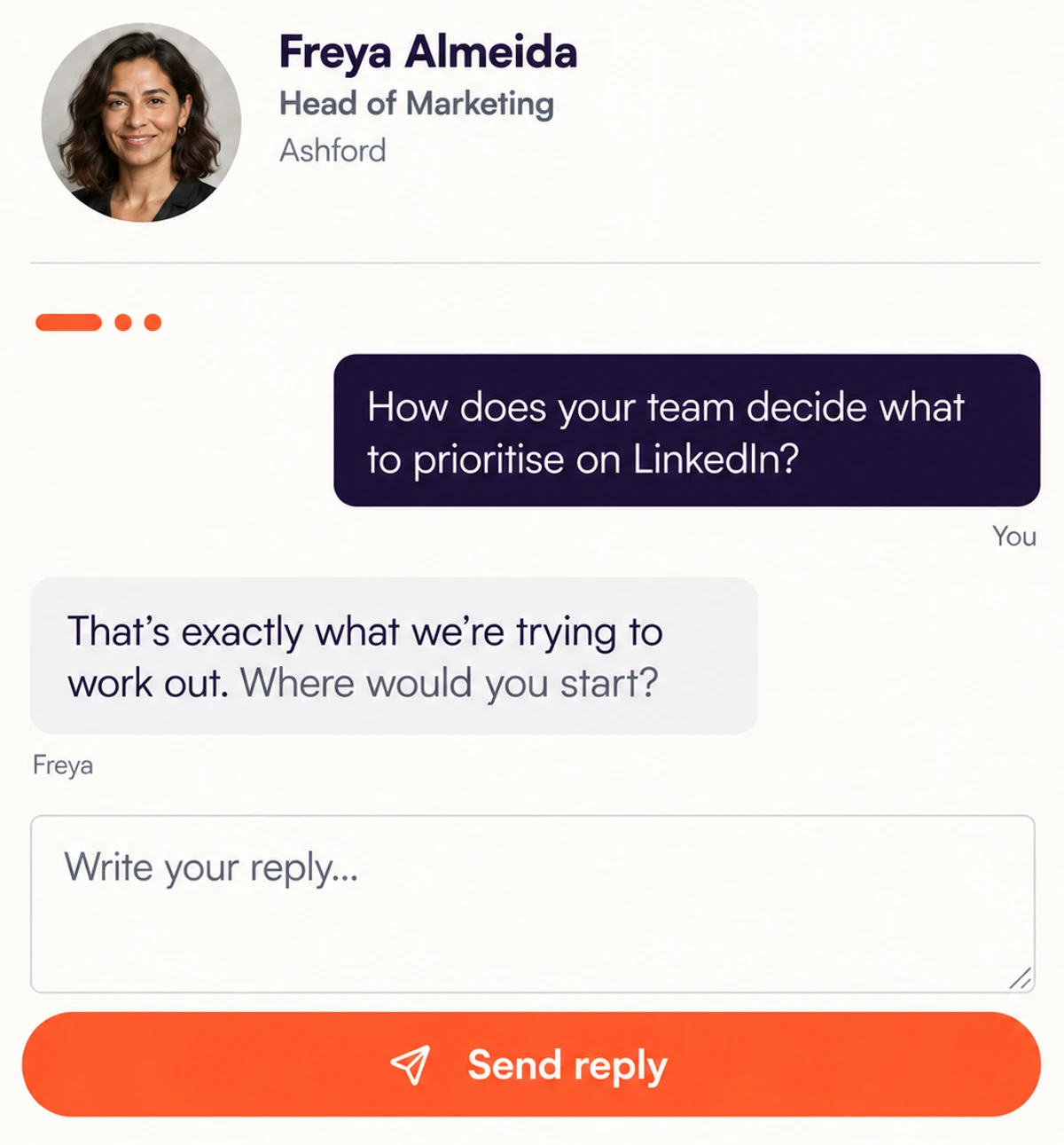
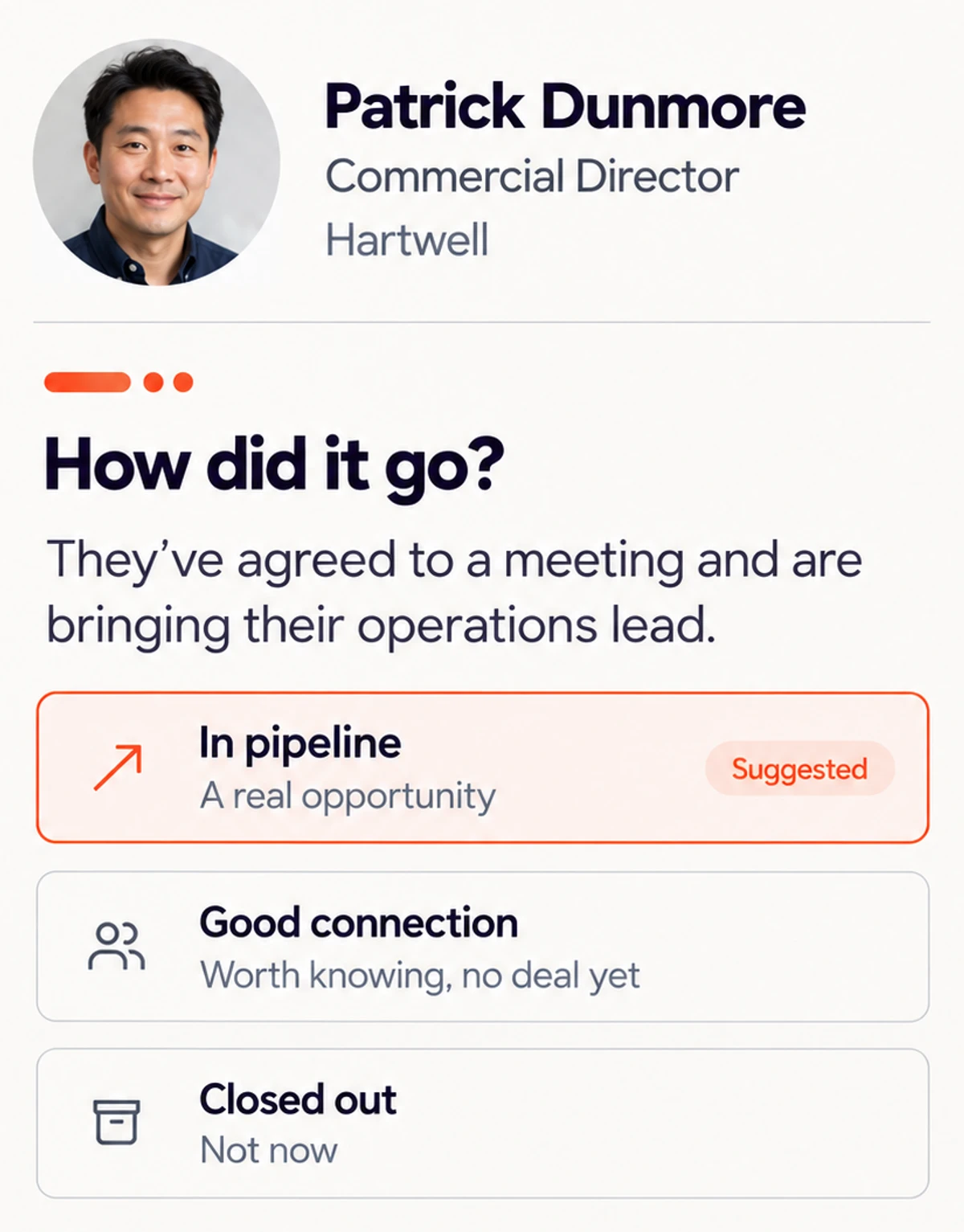
- Ready when you are Every new connection arrives with an opener drafted, and the context beside it: why they matter and what has happened so far.
- Always learning Openers and follow-ups are optimised over time on what actually gets replies.
- Written for them Every message draws on who they are, what they care about and what your team already knows.
- Knows when to nudge And when to stay quiet. Follow-ups are judged on the conversation, not fired off by an automated sequence.
Backstage
The knowledge Drumbeat needs to understand your business.
Backstage gives Drumbeat structured, verified knowledge about your company and the people inside it. It knows what matters, when it matters, and why it’s likely to work.
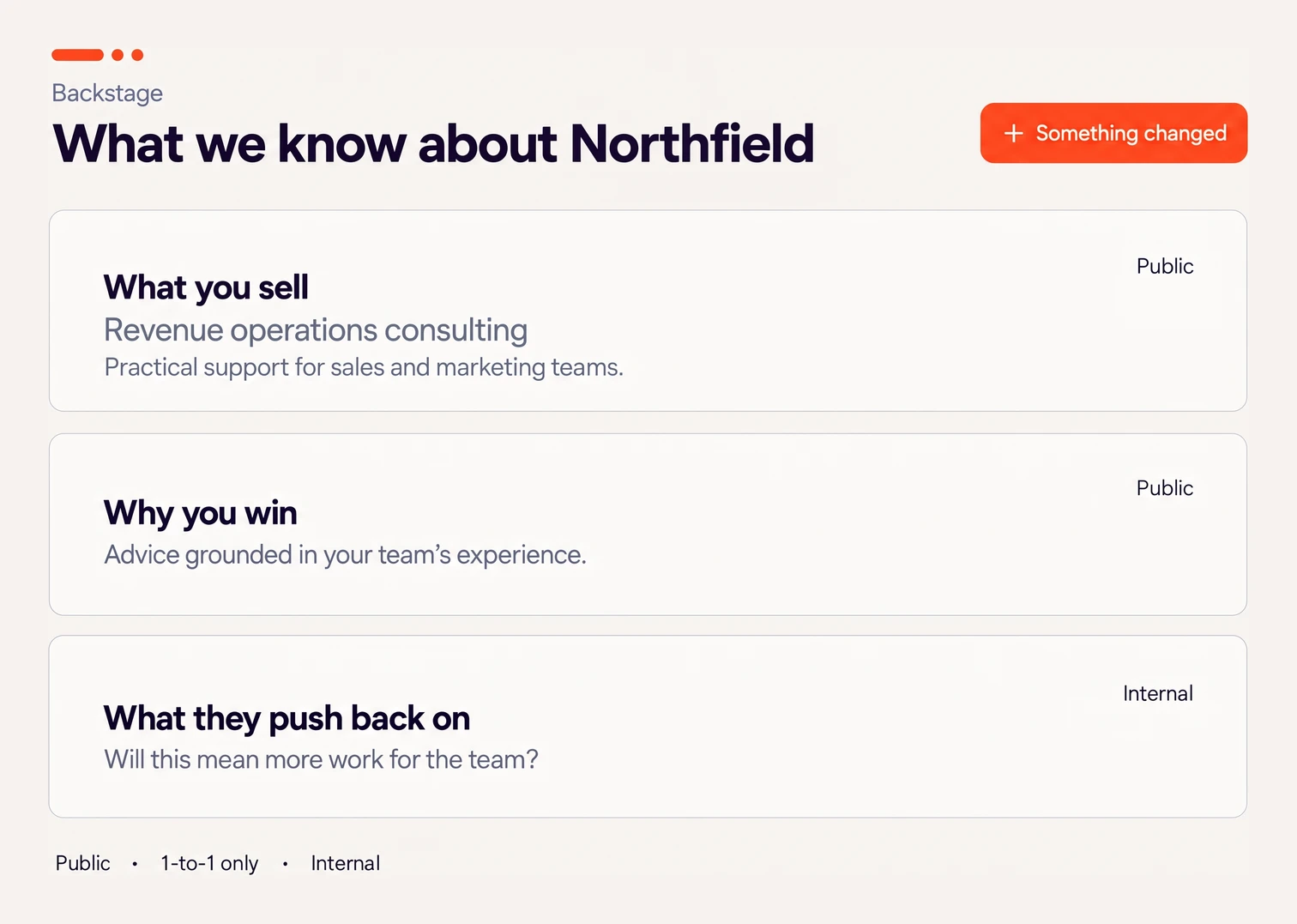
- What you sell, and why you win Products, propositions and the claims behind them, with the evidence.
- What buyers push back on The objections your team hears, and how you answer them.
- Public or internal Each item marked for where it can be said: in public, one to one, or not at all.
- Verified by people Humans confirm what is true, and knowledge is reviewed as it ages.
How Backstage understands your business
Backstage uses Drumbeat’s proprietary B2B knowledge ontology to structure the things that actually matter when somebody is trying to create demand or start a commercial conversation: beliefs and points of view, stories and experiences, individual expertise. It is a model of what a business knows and claims, not a big prompt box, and it feeds both content and prospecting.
Analytics
See what your whole team is actually doing on LinkedIn.
Posting, prospecting and conversations usually happen across dozens of personal accounts, so leadership gets fragments of the picture. Drumbeat brings the activity and the outcomes together: what everybody is doing, and whether it is working.
10.6 conversations a month for daily users
What each one is worth is your number, not ours
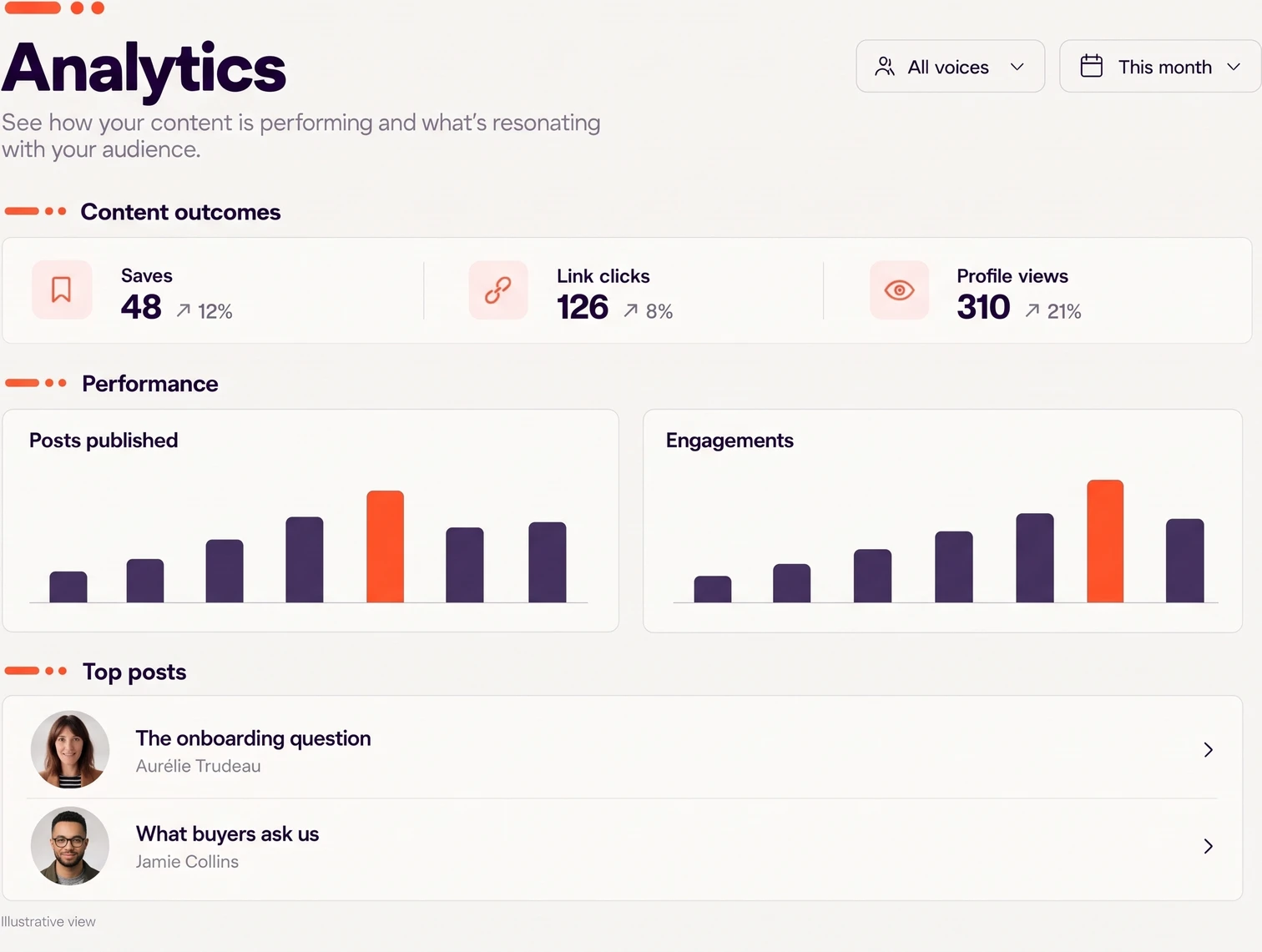
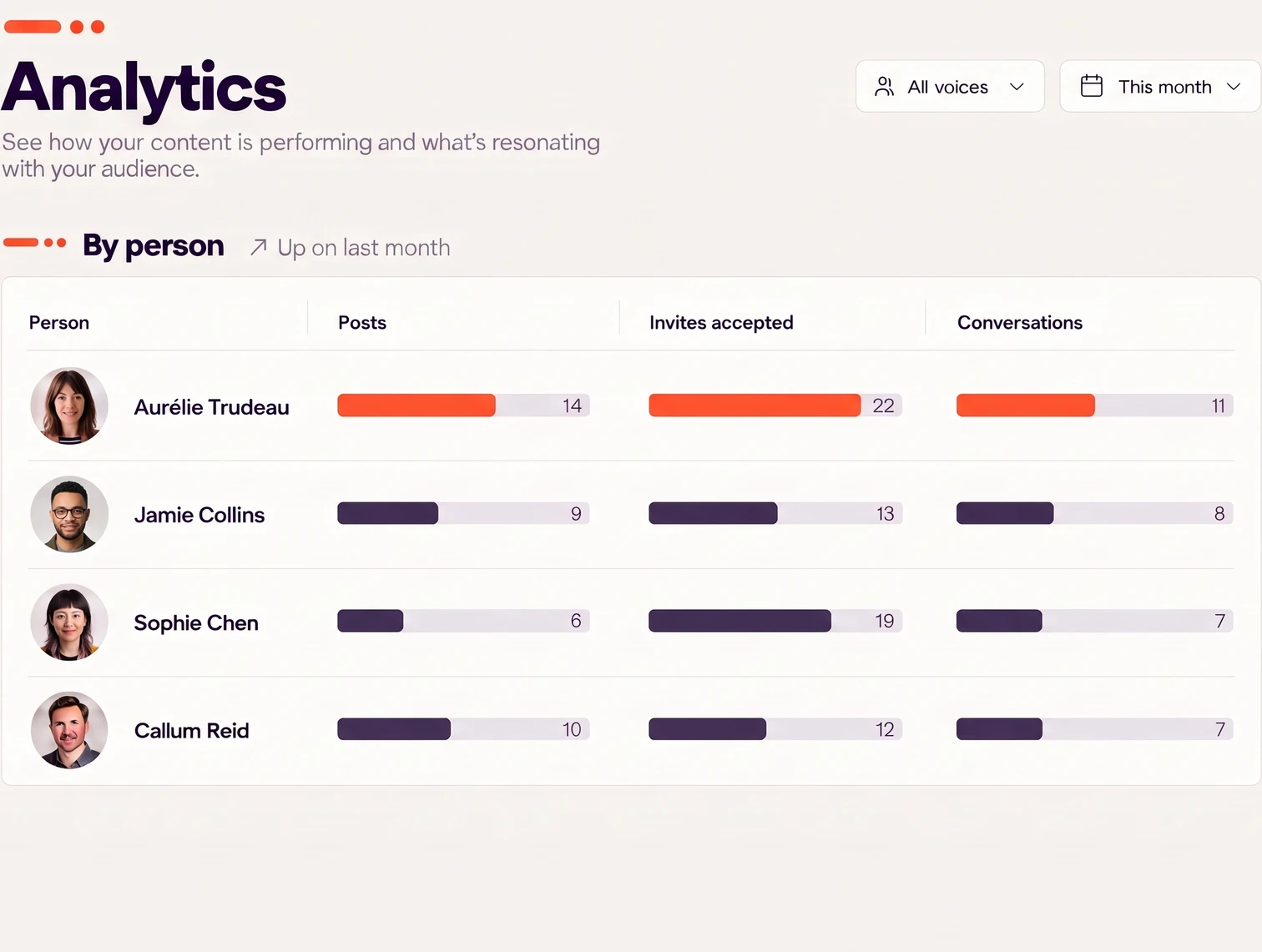
- The whole team, in one view Posting, invites and conversations across every personal account, not fragments.
- Who’s showing up Who is posting and prospecting, how often, and how steadily.
- People compared Which people and which behaviours are driving results, and where to help.
- ROI you can show Conversations, good connections and pipeline, traced back to the LinkedIn activity that started them.
Other tools do part of the job. Drumbeat does all of it.
Advocacy tools, AI SDRs, revenue platforms and general-purpose AI each do something useful. Here is how they compare, row by row, including where they do the job well.
| Capability | Drumbeat | Employee advocacy | AI SDR and automation | Revenue and GTM platforms | ChatGPT or Claude |
|---|---|---|---|---|---|
| Predicts what each person should do next | Yes | No | Partial | Partial | No |
| Statistical prediction and ranking | Yes | No | Partial | Yes | No |
| Prospect recommendations | Yes | No | Yes | Yes | Prompted |
| Live-market content intelligence | Yes | Partial | Limited | Partial | Prompted |
| Campaigns in each person’s own voice | Yes | Partial | No | Limited | No |
| Personal voice modelling | Yes | Partial | Limited | No | Prompted |
| Learns which creative approaches perform | Yes | Limited | Limited | Limited | No |
| Connects content, prospecting and conversations | Yes | No | Partial | Partial | No |
| Team-wide LinkedIn visibility | Yes | Partial | Partial | Limited | No |
| LinkedIn conversation to CRM handoff | Yes | No | Yes | Yes | No |
| Structured company knowledge | Yes | Partial | Partial | Yes | Prompted |
| Human approval built into the workflow | Yes | Yes | Partial | Partial | Yes |
| Generates language | Yes | Yes | Yes | Partial | Yes |
| Learns from user decisions and outcomes | Yes | Limited | Partial | Yes | No |
- Yes does this as a matter of course
- Partial does some of it, or only some vendors do
- Limited a thin version of it
- Prompted when you ask, and supply the material yourself
- No not what it is for
What should I do next?
All of it works towards the same decision. Drumbeat uses the right part of the system to answer it differently for every person on your team.