
Parry Malm

AI entrepreneur, author and keynote speaker

Founder of Phrasee · Co-founder of Drumbeat · Author of The Language Effect

Parry Malm started building an AI business in 2015. By 2022 it counted eBay and Walgreens among its customers, and sold in a $102m exit. Today he's building again: Drumbeat, the system that predicts your next best sales actions.

He speaks about AI, the evidence behind B2B growth, and the reality of running a business when the plan falls apart. His material combines original analysis with the experience of building and selling a company. He makes the numbers understandable, questions the assumptions behind them, and includes the mistakes that tend to disappear from the official success story.

For audiences who want substance, a point of view and something to laugh about along the way.

Parry Malm smiling on a London street, with the dome of St Paul’s Cathedral behind him.
Parry Malm London
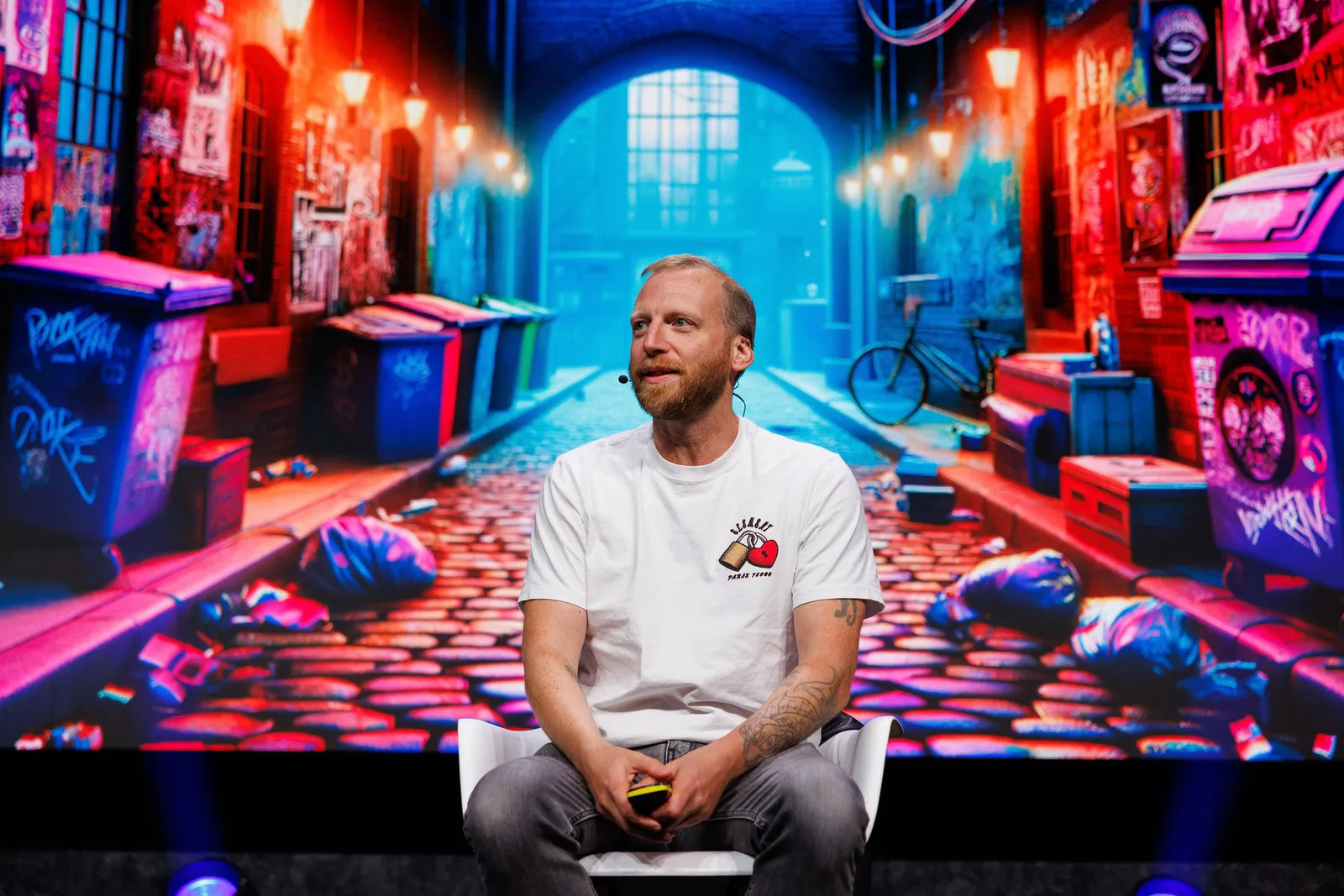
Parry Malm on stage at AntiCon, wearing a headset microphone in front of a large screen showing a neon-lit graffiti alleyway.
AntiCon, Magazine, London. October 2024 Photograph by Sam Frost
Phrasee
Founded 2015, sold 2022 in a $102m exit. Customers included eBay and Walgreens.
The Language Effect
Author. Published 2020.
Drumbeat
Co-founder. The next best action system for B2B sales.

Read the full biography

Four things worth an hour of your audience's time.

Examples of what Parry speaks about, not a fixed catalogue. Each one can be shaped to the event brief, and industry examples change to fit the audience. If your theme sits next to one of these rather than on top of it, say so in your enquiry. That's usually the more interesting conversation.

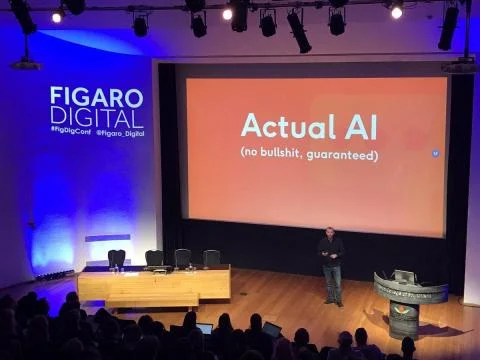
Parry Malm on stage at a Figaro Digital conference in front of a full auditorium, beside a screen reading Actual AI (no bullshit, guaranteed).
Figaro Digital, London

What actually works on LinkedIn? According to actual data, not “trust me, bro”

Attention, trust and the next action that matters

Post more. Find the perfect time. Let AI write it. Chase the algorithm. B2B teams are surrounded by confident LinkedIn advice. How much of it stands up when you look at the evidence?

Drawing on his analysis of LinkedIn posts and his work building Drumbeat, Parry explores what the data can tell us about finding the right connections, content, AI editing and performance, and where the evidence runs out. He makes the numbers accessible, challenges easy conclusions and asks a more useful commercial question: out of a million things you could do on LinkedIn, what should you actually do next?

The session takes the questions every B2B team actually argues about (what to post, who to invite, whether to comment, whether images help, whether AI-written content gets punished, whether anyone genuinely cares about a photo of a dog) and answers them against real data. It connects those decisions to the people a business wants to reach, the conversations it wants to start, and the difference between attention and an opportunity. Examples can be tailored to the industry in the room.

Out of a million things you could do on LinkedIn, what should you actually do next?

Your audience leaves with

  • A way to assess LinkedIn advice against evidence rather than confidence.
  • A clearer understanding of what post-performance data does and does not establish about AI-assisted content.
  • Questions for choosing activity that supports relevant business conversations, beyond chasing impressions.

Suited to

B2B industry conferences, commercial leaders, business owners and teams whose growth depends on professional relationships.

What to do when it feels like AI has fucked your business and/or your career

The value of work, and what customers will pay for next

Or, for the programme: "What to do when AI has upended your business or your career"

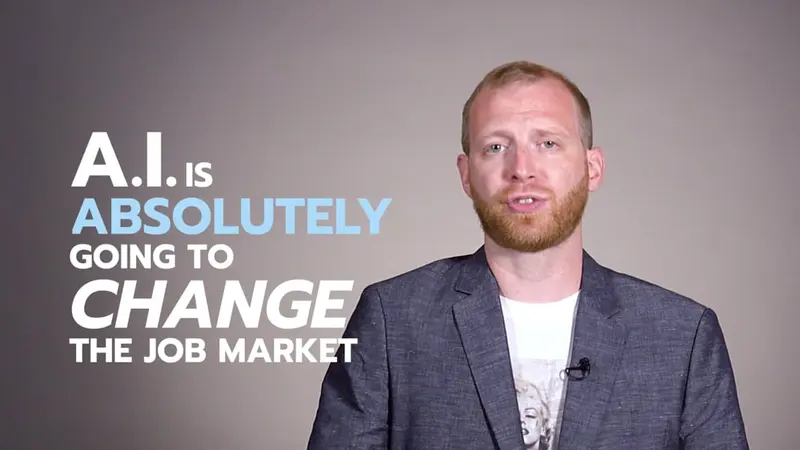
Something a skilled person used to do in a day now takes four minutes. The demos keep coming. Every morning before nine, somebody on LinkedIn explains that your job is finished. If it feels like the ground has moved under your business, or under your career, that is a reasonable thing to feel.

It is also a terrible basis for a decision. Panic and denial are the same mistake in different clothes: both skip the part where you work out what has actually changed. Parry has spent a decade building AI products and pulling apart the tasks people are paid to perform, and he is blunt about the difference between a demo that makes a room go quiet and a change that survives contact with a Tuesday afternoon. Most don’t. The ones that do rarely look impressive.

So the session gets practical about what to do next. Producing more of something is not the same as creating more value. Ask anyone who has received forty AI-written proposals this month. When execution gets cheap, the expensive part moves: to judgement, to accountability, to knowing which of the four-minute outputs is the right one and being willing to put your name on it. Most people are worth more than the task they were measured on, and have never had to say out loud which part that was.

Parry makes the case for working that out yourself, deliberately, before a customer or an employer prices it for you. No formula, because there isn’t one. Accessible evidence, honest uncertainty, and examples adapted to the industry in the room.

Nobody is coming to tell you which half of your job was the valuable half. Working that out is the job now.

Your audience leaves with

  • A way to distinguish tasks AI can assist with from entire roles it might replace.
  • Questions to test productivity claims against the full cost of delivery and checking.
  • A clearer view of where their expertise creates value for customers.

Suited to

B2B industry conferences, professional-services audiences, business owners and commercial leaders.

Who pays when AI gets it wrong?

Responsibility, regulation and whose interests AI safety serves

An AI system makes a consequential mistake. The supplier points to its terms and conditions. The organisation using it points to the supplier. The person affected wants to know who is responsible. Right now, the answer is rarely the people who built it.

Parry argues that meaningful AI regulation must answer that question. Drawing on his experience building AI businesses and contributing evidence to parliamentary discussions, he makes the case for rules tied to how AI is used and the harm it can cause, with responsibility that does not simply disappear into the supply chain.

He also challenges the idea that more regulation necessarily means better protection. Rules can protect people; they can also protect the largest vendors from competition. This keynote explores the incentives behind both, and the difficult division of responsibility between those building AI and those choosing to rely on it.

Rules can protect people. They can also protect the largest vendors from competition. It is worth knowing which one you are being sold.

Your audience leaves with

  • Questions to ask about who controls, monitors and can intervene in an AI system.
  • A way to examine whether safety commitments change behaviour or shift responsibility.
  • A business perspective on sector-specific regulation and competition.

Suited to

Leadership conferences, industry associations and sectors where professional judgement and customer trust matter.

When nothing goes to plan

What entrepreneurs need to do when everything feels fucked

Or, for the programme: "Making hard decisions when the plan falls apart"

Seven days before a fundraise was supposed to close, the investors pulled out. They didn’t believe the business would grow fast enough. Parry and his team tightened their belts and carried on. The company later sold.

Eight days before his first child was born, his co-founders tried to remove him. If you come at the king, you best not miss.

These are two of the stories behind a founder journey that looks considerably tidier in a biography. Others include losing the second-biggest customer during sale exclusivity, and having to make difficult decisions about people when being liked was no longer an option.

Parry shares what those moments demanded of him: reassessing the plan, deciding what mattered most and taking responsibility for choices without knowing how they would turn out. And he outlines what it takes to go from idea to exit. There is humour, frustration and hindsight, including the limits of hindsight when the business eventually succeeds.

A founder journey looks considerably tidier in a biography than it did at the time.

Your audience leaves with

  • Questions for separating an immediate crisis from the longer-term viability of a business.
  • A candid perspective on the trade-offs involved when funding and growth plans change.
  • Lessons in making difficult people decisions and owning their consequences.

Suited to

Founder conferences, entrepreneur networks and business owners. Also suited to an on-stage interview.

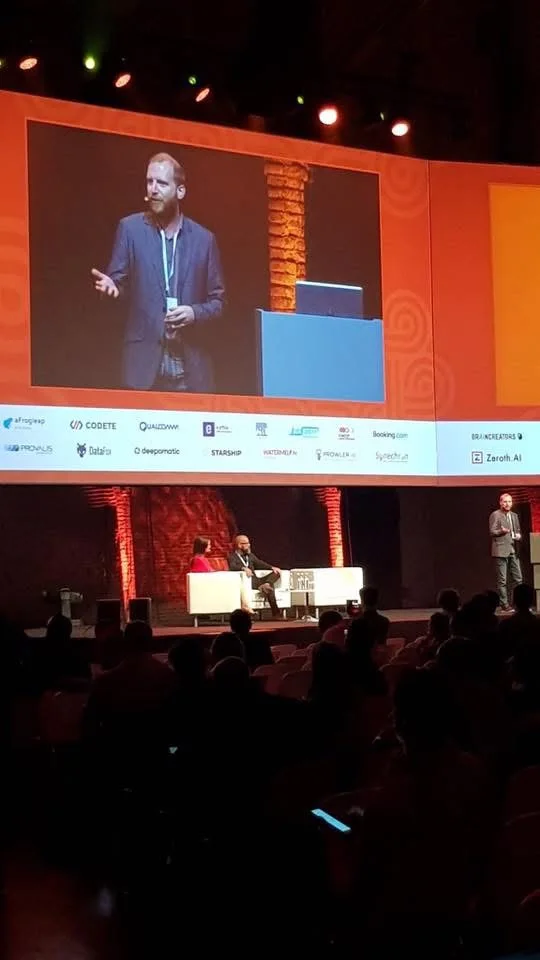
Parry Malm standing on a panel stage at AntiCon, mid-gesture, with two seated panellists beneath a screen reading The Future of AI.
On the panel. AntiCon, Magazine, London Photograph by Sam Frost

The long version.

Parry Malm smiling on a London street, with the dome of St Paul’s Cathedral behind him.

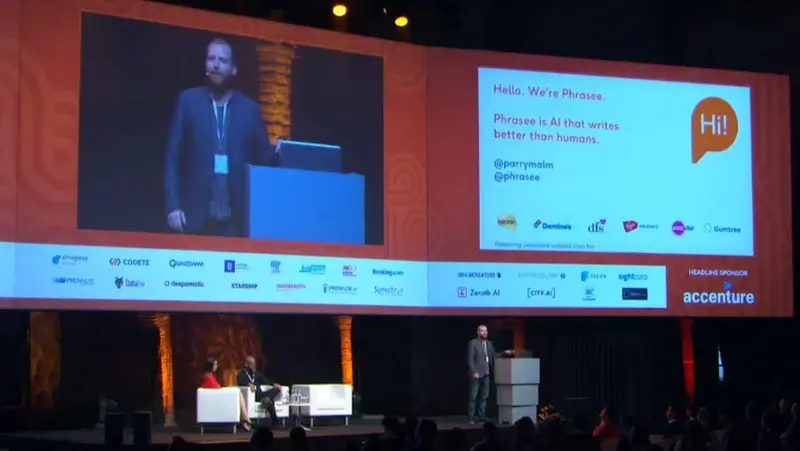
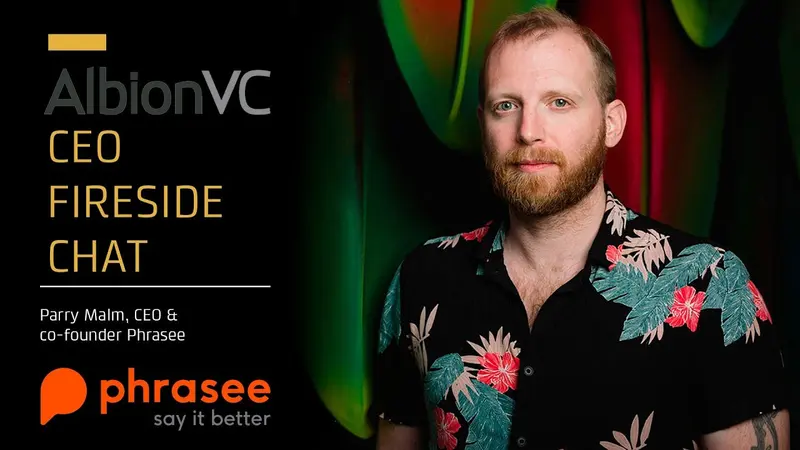
Parry Malm founded Phrasee in 2015 and led the company through its sale to a global private equity consortium in 2022, in a $102m exit. Phrasee developed AI technology to generate and optimise marketing language for global brands, including eBay and Walgreens, way before AI was cool. It made the Deloitte UK Technology Fast 50 in 2020, on 825% growth.

He is now co-founder of Drumbeat, which helps B2B teams turn LinkedIn activity into business opportunities. He is the author of The Language Effect, published in 2020, and contributed evidence to the All-Party Parliamentary Group on Artificial Intelligence at the House of Lords in 2017.

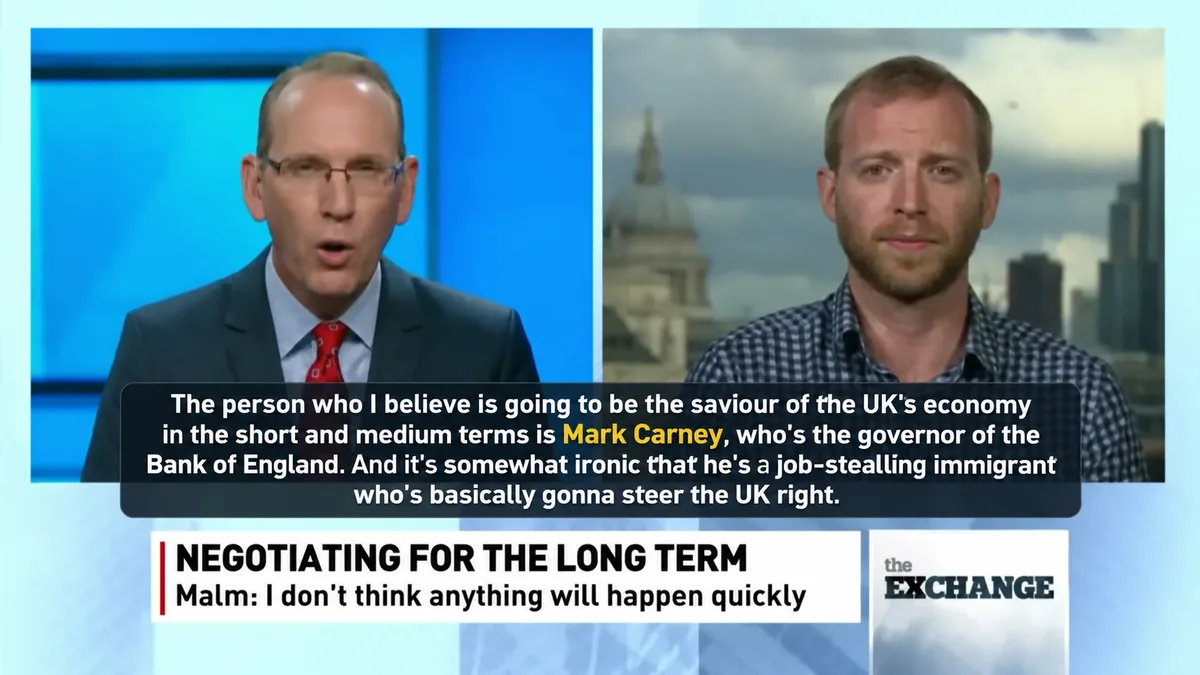
His speaking history includes conferences around the world, to audiences from 50 to 5,000. He has been interviewed by the BBC, CBC, Bloomberg, CNBC, The Telegraph and City A.M., among others.

Originally from Canada and based in London, Parry is a much better entrepreneur than ice hockey player.

He is also, depending on which British tabloid you read, a monster hunter. On a family trip to Loch Ness in 2024 he photographed something moving through the water (“bigger than a Sasquatch but smaller than Ogopogo”) and the picture ran as the first Nessie sighting of the year. CBC covered the coverage. He remains open to the idea.

More on what he's building now at Drumbeat.

Everything you need for the programme.

Copy what you need. No email address required, no form in the way.

Download portrait

Short biography

Parry Malm is an AI entrepreneur, author and co-founder of Drumbeat. He founded Phrasee in 2015 and led it from zero to a $102m exit in 2022. The author of The Language Effect and a past contributor to the UK’s parliamentary AI group, he combines original analysis, humour and candid founder experience in talks about business growth, entrepreneurship and AI responsibility.

Full biography

Parry Malm founded Phrasee in 2015 and led the company through its sale to a global private equity consortium in 2022, in a $102m exit. Phrasee developed AI technology to generate and optimise marketing language for global brands, including eBay and Walgreens, way before AI was cool. It made the Deloitte UK Technology Fast 50 in 2020, on 825% growth.

He is now co-founder of Drumbeat, which helps B2B teams turn LinkedIn activity into business opportunities. He is the author of The Language Effect, published in 2020, and contributed evidence to the All-Party Parliamentary Group on Artificial Intelligence at the House of Lords in 2017.

His speaking history includes conferences around the world, to audiences from 50 to 5,000. He has been interviewed by the BBC, CBC, Bloomberg, CNBC, The Telegraph and City A.M., among others.

Originally from Canada and based in London, Parry is a much better entrepreneur than ice hockey player.

He is also, depending on which British tabloid you read, a monster hunter. On a family trip to Loch Ness in 2024 he photographed something moving through the water (“bigger than a Sasquatch but smaller than Ogopogo”) and the picture ran as the first Nessie sighting of the year. CBC covered the coverage. He remains open to the idea.

Host introduction

Our next speaker started building an AI company in 2015, way before it was cool, and led it through to a $102m exit. After unsuccessfully retiring for two years, he decided to start again, and now runs Drumbeat, the next best action system for sales. He’s the author of The Language Effect and was named Tech Entrepreneur of the Year at the UK Business Awards in 2016. Today, he brings the experience, the numbers and a few lessons that aren’t safe for LinkedIn. Please welcome Parry Malm.

Written to be read aloud. Roughly 30 seconds.

Portrait

Parry Malm smiling on a London street, with the dome of St Paul’s Cathedral behind him.

Approved publicity portrait. Please use it uncropped or cropped square, without filters or retouching.

Web resolution. For print programmes and large-format signage, ask us for the high-resolution original in your enquiry.

Topics

  • What actually works on LinkedIn? According to actual data, not “trust me, bro” Attention, trust and the next action that matters
  • What to do when it feels like AI has fucked your business and/or your career The value of work, and what customers will pay for next Or: "What to do when AI has upended your business or your career"
  • Who pays when AI gets it wrong? Responsibility, regulation and whose interests AI safety serves
  • When nothing goes to plan What entrepreneurs need to do when everything feels fucked Or: "Making hard decisions when the plan falls apart"

Tell us about the event.

Content and examples can be adapted to the audience and event brief, with time for questions by arrangement. If the date isn't fixed or the event is virtual, just say so. Both are fine.

Formats

Keynotes
A full session built around one argument, with original analysis and room for questions by arrangement.
Conference general sessions
Main-stage slots for mixed audiences, with examples adapted to the industry in the room.
On-stage founder interviews
A moderated conversation about building, selling and starting again. Works well for the founder material.

Prefer email? hello@drumbeat.com

The event name, and who's running it.

A date, a month, or flexible.

City, or virtual.

Who's in the room, and roughly how many.

What the event is for, what you want the audience to leave with, session length, and anything else that matters.